
Last updated November 25, 2026
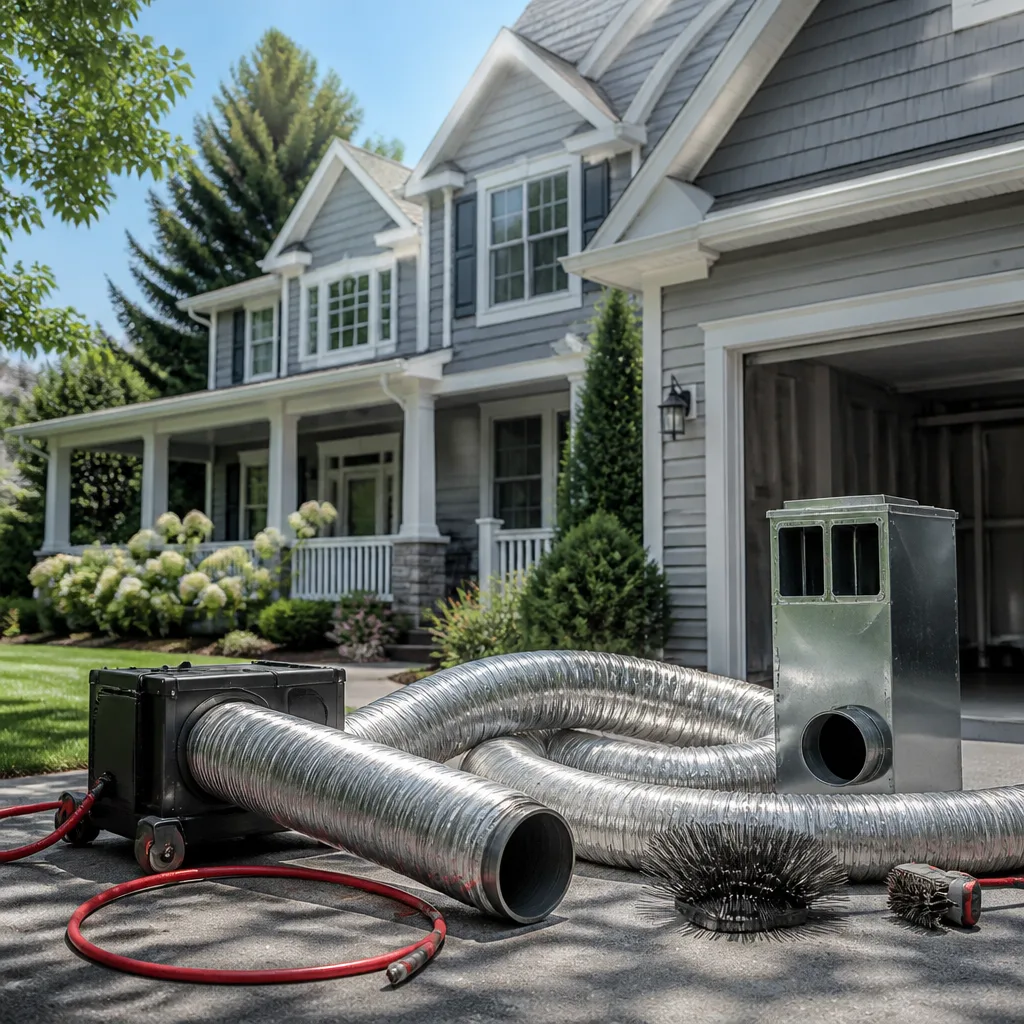 Whole-home duct cleaning
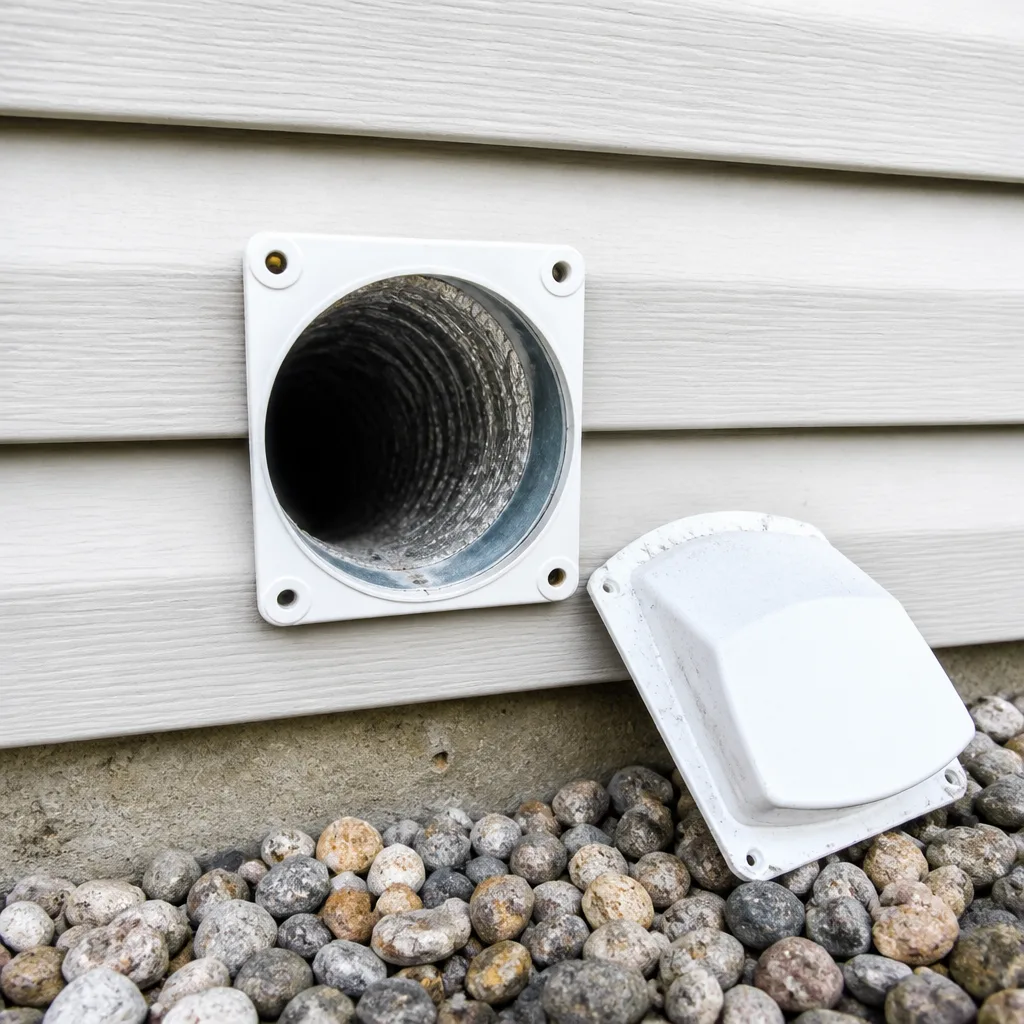 Dryer vent cleaning
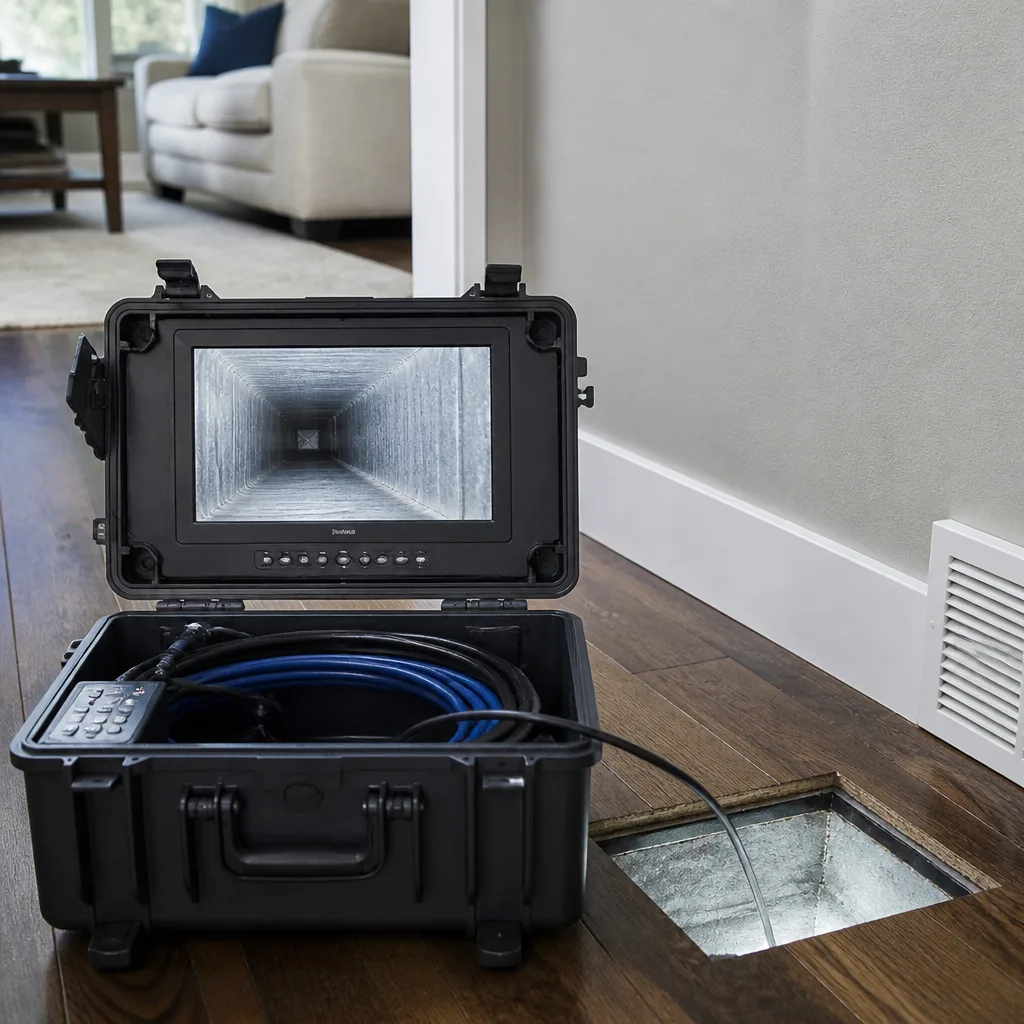 Camera inspection
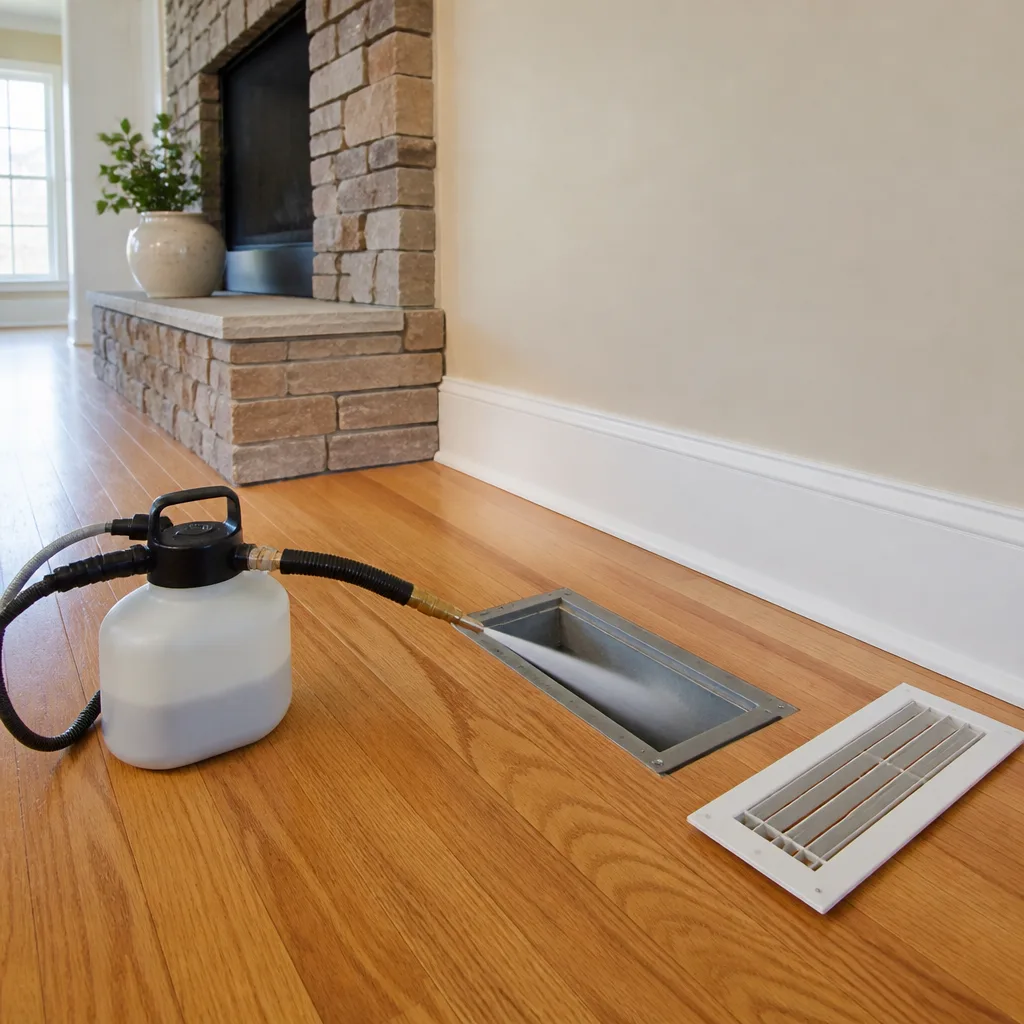 Sanitizing & deodorizing
Whole-system duct and dryer vent check with before-and-after photos - you see exactly what came out of your vents
That "$99 whole-house special" is a bait ad - the real number appears once they are in your hallway, or the "clean" is a shop-vac at the register. We photograph the inside of your ducts before and after instead.
Choosing the Right Air Duct Cleaning Brand: A Buyer’s Guide for Lehi
Most homeowners assume air duct cleaning companies all carry the same gear and that picking one comes down to price. That assumption is the reason so many Lehi families end up with a mediocre job: a single machine pushed through a few vents, no camera, no documentation, and a system that’s barely cleaner than it was before. Here’s the part the coupon mailer never tells you. There is no single best brand in professional air duct cleaning equipment. The contractors who do genuinely thorough work carry tools from more than one manufacturer, because no one brand leads in every component category. This guide maps the equipment landscape so you know exactly what a properly equipped truck should hold.
Quick Answer
The best air duct cleaning brands aren’t one brand: a well-equipped contractor typically carries rotary brush systems from Rotobrush, negative-air collection units from Abatement Technologies, and pneumatic tools from Nikro, each chosen for what it does best. If a company shows up with only one machine for every task, they’re making job-site compromises. Ask what they carry, ask about the inspection camera, and ask for before-and-after video of your own system.
Styles & brands we work with
- Whole-home duct cleaning
- Dryer vent cleaning
- Camera inspection
- Sanitizing & deodorizing
Table of Contents
- The Four Equipment Categories Every Pro Should Cover
- Where Rotobrush, Abatement Technologies, and Nikro Each Excel
- Why Negative Pressure Is the Whole Ballgame
- The Inspection Camera Question Nobody Asks
- Aeroseal Duct Sealing vs. Cleaning: What’s the Difference?
- How to Read a Contractor’s Answer About Their Equipment
- What a Complete Cleaning Actually Involves
- 10 Questions to Ask Before You Book
The Four Equipment Categories Every Pro Should Cover
Air duct cleaning isn’t one process with one tool. It’s a sequence of distinct jobs, and each one needs the right machine. When you talk to a contractor in Lehi, listen for four categories. A company that can speak clearly about all four is a company that understands its trade.
1. Negative pressure collection units. This is the backbone of the whole operation. A powerful vacuum and HEPA filtration unit creates negative pressure inside the duct system so that debris loosened by brushes gets pulled toward the collection point instead of puffing out into your living room. Abatement Technologies builds equipment trusted in commercial and restoration work, and a unit like that is the kind of tool that should be parked at the main trunk before any brushing starts.
2. Rotary brush systems. These are the mechanical cleaning workhorses. A rotating brush head travels through the ductwork on a flexible shaft, scrubbing the walls where dust, pet hair, and biological growth tend to cling. Rotobrush is the name most associated with this category, and the equipment is widely used in both residential and commercial HVAC work.
3. Pneumatic whip systems. Where a rotating brush can’t reach, compressed air does the work. A whip system uses air pressure to flail flexible lines inside the duct, knocking loose debris from bends, boots, and tight runs. Nikro is a well-known manufacturer in this part of the toolset, and the equipment shows up in restoration and commercial work where duct geometry is unpredictable.
4. Inspection cameras. Documentation matters as much as cleaning. A borescope or inspection camera lets the technician see inside the duct before and after, and it lets you see the results rather than take them on faith.
In our experience, the best-equipped contractors treat all four as baseline, not premium add-ons. Ask about each category specifically when you call for air duct cleaning in Lehi, and listen for whether the answer sounds like someone describing their own tools or reciting a brochure.
Where Rotobrush, Abatement Technologies, and Nikro Each Excel
Each of the major brands earned its place by solving a specific problem well. Understanding those strengths is the fastest way to know whether a contractor’s equipment list makes sense.
Rotobrush. Best known for rotary brush systems. The rotating brush head is gentle enough to clean flex duct without shredding the liner, and aggressive enough to strip years of caked dust from rigid metal trunk lines. If your Lehi home has a mix of flex runs to individual rooms and sheet-metal trunk, a rotary system handles both without switching tools mid-job.
Abatement Technologies. The strength here is negative air containment. The equipment is built for environments where capturing airborne particles matters, which is exactly what duct cleaning requires. Without proper negative pressure, loosened debris can migrate into the home instead of out of it. Abatement units are widely used in restoration work for that reason.
Nikro. Pneumatic and specialized cleaning tools, plus HEPA vacuum components. Nikro equipment fills the gaps that rotating brushes can’t reach and supports the overall containment strategy. It’s the toolbox brand that rounds out a serious load-out.
The point isn’t that one brand wins. The point is that each of these manufacturers dominates a different part of the trade, and a contractor who only stocks one of them is making a compromise somewhere in every job they do. A single-machine operation can clean a straight section of duct. It struggles with unusual geometry, tight boots, or a system that needs three tools in sequence. When you’re booking HVAC cleaning for the whole air handler and plenum, not just the ducts, that sequence matters even more.
Why Negative Pressure Is the Whole Ballgame
If you only ask one technical question before booking, ask about negative pressure. Here’s why. Every cleaning method loosens debris. The whole job is about capturing it before it finds its way into your living room, your bedrooms, and your children’s lungs. A strong commercial-grade vacuum with HEPA filtration creates a controlled vacuum inside the duct system so that anything dislodged travels toward the collection point instead of drifting out of a register.
In Lehi, that matters more than a lot of homeowners realize. Valley winters run dry, and heating systems get a workout for months. Dust and debris that would otherwise sit dormant become airborne every time the furnace kicks on. A cleaning that dislodges years of accumulated material without proper containment can actually leave the indoor air worse in the short term. That’s not speculation; it’s basic physics of air handling.
What to look for:
- A collection unit rated for negative pressure, not a shop vac with a long hose.
- HEPA filtration on the exhaust side of the collection unit, so the machine doesn’t vent fine particulate back into the room.
- The unit connected at the main trunk or a designated access port, not at a distant register.
- Sealed registers and returns so that cross-drafts don’t pull debris into untreated spaces.
Equipment from Abatement Technologies is built specifically for this part of the job. When a contractor brings that class of equipment, the containment conversation becomes concrete rather than theoretical. If the answer to “how do you handle negative pressure?” is vague, that’s your signal to keep shopping.
The Inspection Camera Question Nobody Asks
Here’s a question that separates serious contractors from the rest: will you show me before-and-after video of my own ducts? The best cleaning companies run an inspection camera through the system before work begins and again after the job is complete. The footage isn’t a gimmick. It’s the only way to know the work was actually done.
A quick checklist for what proper documentation looks like:
- Pre-cleaning video. The camera is inserted at the main trunk and at the far ends of runs, and footage is captured before any equipment is connected. This establishes the starting condition of the duct interior.
- Same locations after cleaning. The technician returns the camera to the same access points and captures the after-state.
- Side-by-side comparison. A well-documented job gives you the before-and-after footage together, so you’re not matching shots by memory.
- Camera run through pneumatic and rotary cleanings. The inspection system should be used in concert with the mechanical tools, not as a separate visit.
In our experience, homeowners in the Lehi area who ask for video documentation are consistently the ones who end up happiest with their cleans. Not because the others got worse work, but because asking the question pushes the conversation toward measurable proof. It also rules out contractors who don’t own an inspection camera at all, which tells you something about how they approach the rest of the job.
Access matters too. A camera has to get in somewhere, and every duct system needs access ports. Ask whether the contractor cuts dedicated access points or works through existing registers, and how they seal the ports afterward. Sealing matters because duct leakage is the next topic.
Aeroseal Duct Sealing vs. Cleaning: What’s the Difference?
Cleaning and sealing are two separate jobs with two separate goals, and a lot of homeowners in Lehi don’t realize how often both are needed. Cleaning removes accumulated debris from the inside of the ducts. Sealing addresses leakage in the ductwork itself: the gaps, disconnected joints, and unsealed boots where conditioned air escapes before it ever reaches your living room.
Aeroseal is a specific method for the sealing side of that equation. An aerosolized sealant is injected into the duct system and deposits along the interior walls, closing small leaks as it travels. It’s a different category of service from cleaning, and the two complement each other.
When a contractor who carries both capabilities is the right choice:
- You have hot or cold rooms. If one bedroom is consistently warmer or cooler than the rest of the house, a leaking duct run is often the cause.
- You’ve noticed dust streaks around registers. Dust staining from leaky joints is one of the most common visual cues that a duct system isn’t sealed.
- Your energy bill has crept up without a corresponding change in usage. Escaping conditioned air means the system works harder to do the same job.
- You’re already having the system cleaned. It’s far more efficient to assess leakage while the ducts are accessible than to clean now and have someone cut back into the system later.
Here’s where a broader service menu earns its keep. A contractor who only cleans will clean around known leaks and leave you to find someone else for the sealing work. A contractor who offers duct repair and sealing as part of the same operation can find compromised ductwork during the cleaning and fix it before the access ports are closed. In our experience, that continuity is the reason a full-system approach produces better outcomes than a single-service visit.
If your home has known duct leakage, the right question isn’t “who cleans ducts best?” It’s “who can assess the whole air pathway, clean it, seal it, and show me the result?” That’s a bigger conversation than the coupon in the mail answers.
How to Read a Contractor’s Answer About Their Equipment
When you ask a contractor what equipment they use, most will give you a version of “the best.” That’s not useful. The useful answers are specific, and you can usually tell within three sentences whether you’re talking to a technician or a salesperson.
A professional-sounding answer typically includes:
- Named equipment brands, not just descriptions (“Rotobrush and Nikro” beats “professional-grade equipment”).
- Reference to negative pressure and HEPA containment without prompting.
- A clear description of how access ports are cut and sealed.
- Mention of the inspection camera without being asked.
- Willingness to show you the collection unit’s filter before work begins.
A brochure-reading answer usually sounds like this:
- “We use the most advanced technology available.” No brand, no tool names.
- “We’ve been doing this for decades.” Technician tenure is fine to mention, but the equipment question is what matters.
- “Our process is fully certified.” Certified by whom, for what equipment?
- Reluctance to describe the containment setup.
- An inspection camera that’s mentioned only as a premium add-on.
One more thing to listen for: how they describe the dryer vent cleaning service. Dryer vents are a distinct job from duct cleaning, with different equipment and different access needs. A contractor who offers it as a genuine standalone service understands the fire-safety side of the home’s air pathway. One who tacks it onto a cleaning quote as an afterthought probably isn’t bringing the right tool.
In our experience, the contractors who answer technical questions with specific equipment names are the same ones who show up with a full load-out and document the work. The ones who deflect are usually trying to compete on price alone, and the equipment gap shows up on the job.
What a Complete Cleaning Actually Involves
A complete cleaning of a home’s air pathway is more than running a vacuum through the registers. Here’s what a thorough job looks like, step by step, from the moment the technician arrives until the equipment is packed up.
- Walk-through and system assessment. The technician identifies the system layout, counts supply and return runs, checks for existing damage or disconnection, and locates the air handler. This is the point where a full-system contractor notes whether sealing will be needed after cleaning.
- Access port preparation. Small holes are cut into the ductwork at strategic points. They’re sized to allow the brush and camera to enter, and are sealed with proper caps or tape at the end of the job.
- Negative pressure connection. The collection unit is connected at the main trunk, HEPA filtration is verified, and registers are sealed so the negative pressure holds throughout the cleaning.
- Mechanical cleaning. Rotary brushes and pneumatic whips work through each run, from the plenum outward to the boots. Debris is drawn toward the collection unit.
- HVAC unit and blower cleaning. The air handler, blower wheel, and coil are addressed next. This is where a full-system contractor distinguishes themselves from a duct-only cleaner, because a clean duct system connected to a dirty blower only re-contaminates the ducts the first time the fan runs.
- Camera documentation. Post-cleaning video is captured at the same access points as the pre-cleaning footage, and the side-by-side comparison is prepared.
- Sealing (if applicable). Any compromised joints or connections are repaired and sealed, or the Aeroseal discussion happens here.
- Access port caps and final walk-through. Ports are sealed, the workspace is cleaned up, and the technician walks the homeowner through the results.
That sequence is what “from the blower to the vent” means in practice. Anything short of it is a partial job, and the missing pieces are usually the ones you can’t see. For Lehi homeowners dealing with allergy symptoms or a system that hasn’t been cleaned in years, the full sequence is where the value sits.
10 Questions to Ask Before You Book
Bring this list to the phone call. The answers you get will tell you more about a contractor than a website ever will.
- What brand of rotary brush system do you carry? Rotobrush and Nikro are both strong answers. “We use a high-powered brush” is not.
- How do you establish negative pressure? Listen for HEPA filtration and an Abatement Technologies-class collection unit.
- Can I see the before-and-after video? The right answer is yes, of your own system, at the same access points.
- Do you cut dedicated access ports, and how do you seal them? A contractor who only works through registers is limiting the reach of their cleaning.
- Do you clean the air handler and blower, or just the ducts? A full-system contractor does both.
- Do you offer duct repair and sealing? If the answer is no, ask who they’d refer you to; if the answer is yes, ask how they decide whether sealing is needed.
- Is dryer vent cleaning a standalone service? It should be, with its own equipment and safety-focused approach.
- What air quality brands do you work with? Honeywell and Aprilaire are the standard names. Contractors who stock and service them are positioned to help with filtration after the cleaning.
- What does the estimate cover? You want a flat price per system, set in writing before work starts, not a per-vent quote.
- What documentation do I get at the end? Before-and-after photos of your own ducts, not a generic brochure or a stock image.
If you’re booking Lehi Air Duct Cleaning services and one of these questions gets a blank look, that’s useful information. If every answer is specific, you’ve found a contractor worth scheduling. Call (833) 513-8123 if you want to hear those answers directly from us. We answer 24/7.
Common Mistakes to Avoid
- Booking on price alone. The cheapest quote in Lehi is usually cheapest because the equipment load-out is a single vacuum and a shop-vac hose. That kind of “cleaning” can actually re-suspend dust into the home.
- Skipping the negative pressure question. If you don’t ask how debris is contained, you won’t know until you see dust on the furniture. Ask specifically about the collection unit and HEPA filtration before scheduling.
- Accepting a per-vent price. Per-vent pricing rewards efficiency over thoroughness and often balloons once the technician is on-site. A flat price per system agreed in writing is the honest model.
- Ignoring the camera. Without before-and-after video of your own system, you have no way to verify the work. Opt out of the camera and you’re trusting the pitch.
- Cleaning without assessing the air handler. A clean duct system connected to a dirty blower wheel re-contaminates itself. Ask whether the HVAC unit and blower are part of the job.
- Skipping dryer vent cleaning. It’s a fire-safety service, not an accessory. If no one has cleaned the dryer vent in years, add it to the same visit.
- Treating equipment as a detail. The question isn’t just whether the contractor can clean ducts. It’s whether they brought the right tool for the specific configuration in your home, which can include tight boots, long flex runs, or a sealed plenum that needs sealing addressed after cleaning.
See the difference
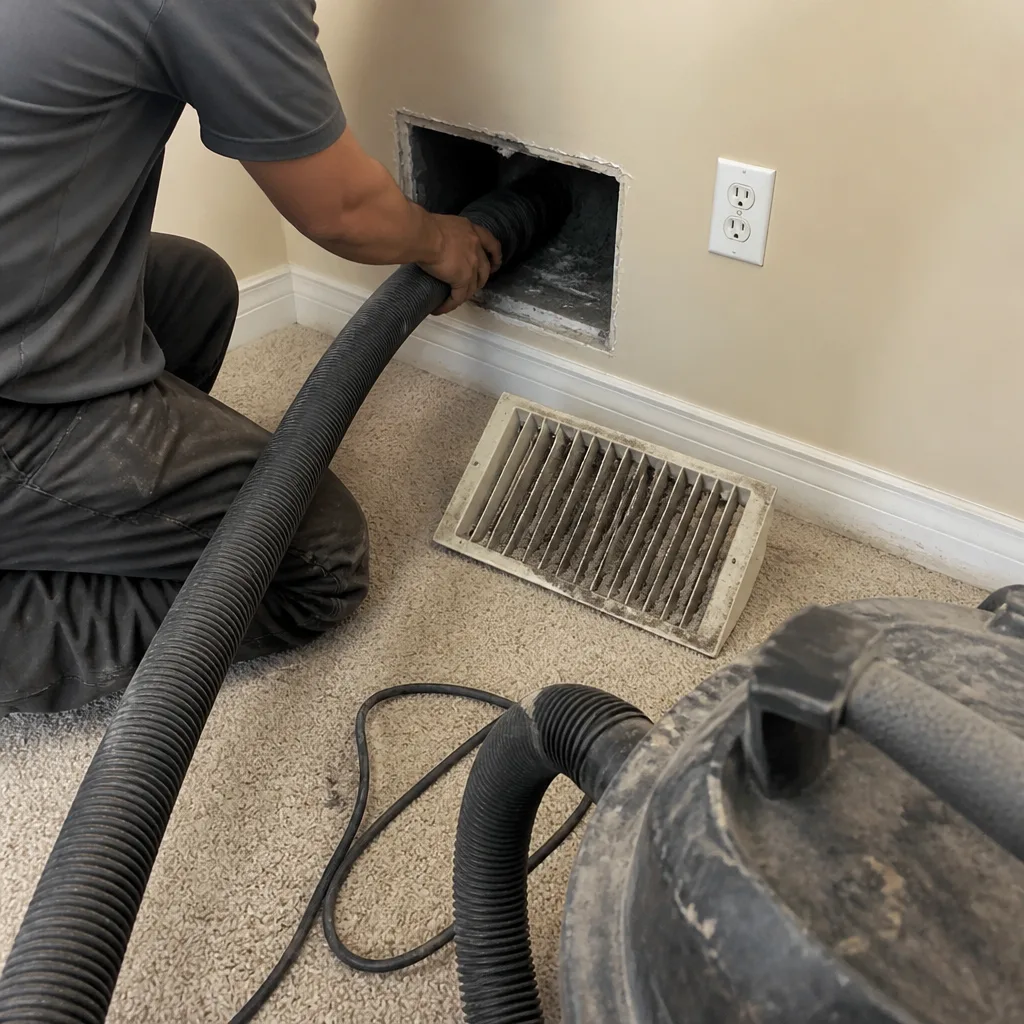 Before
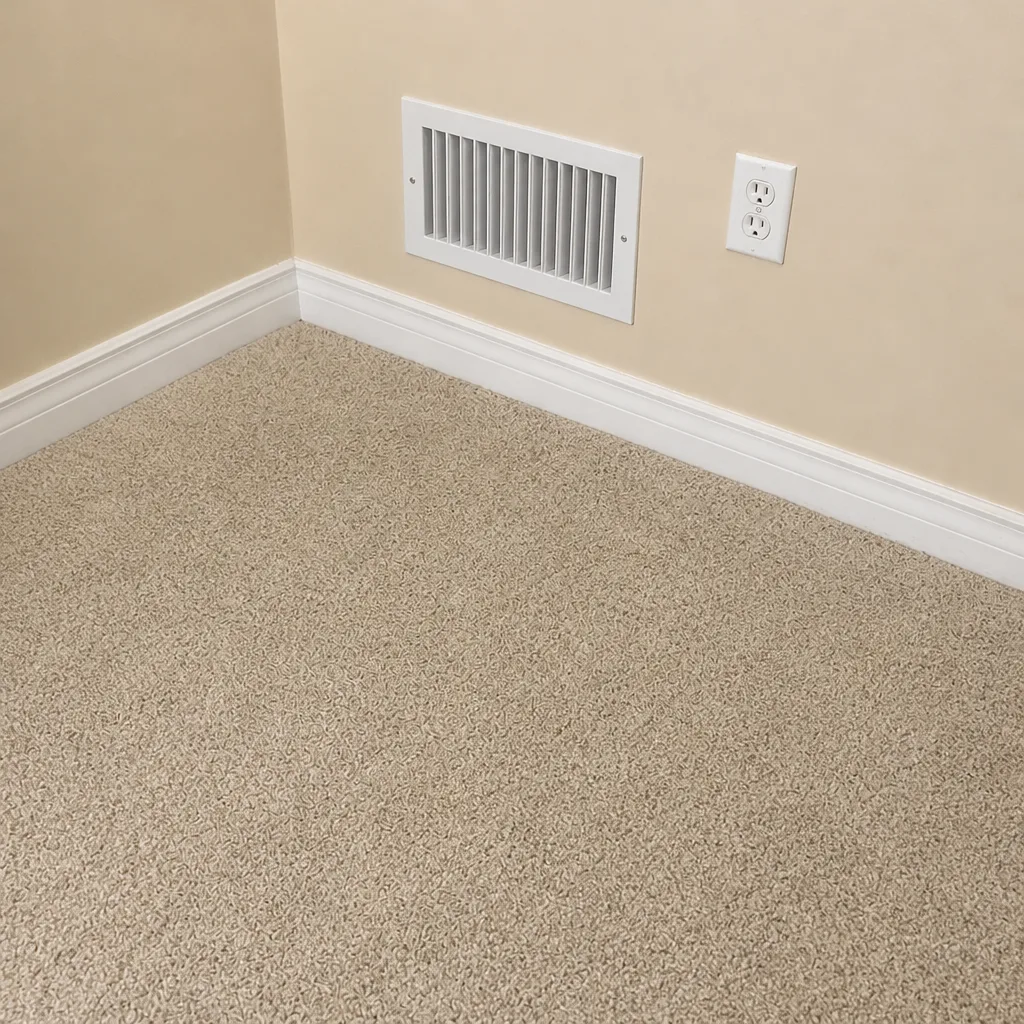 After
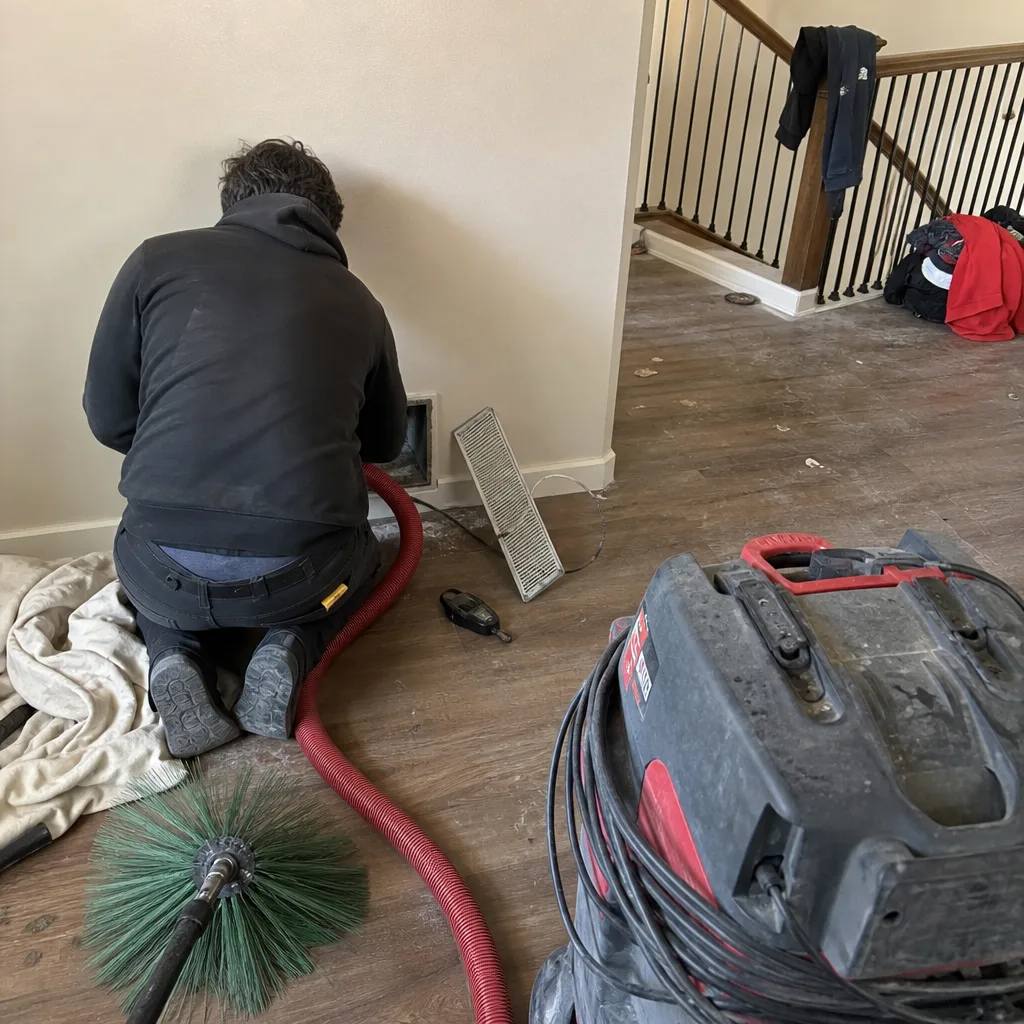 Before
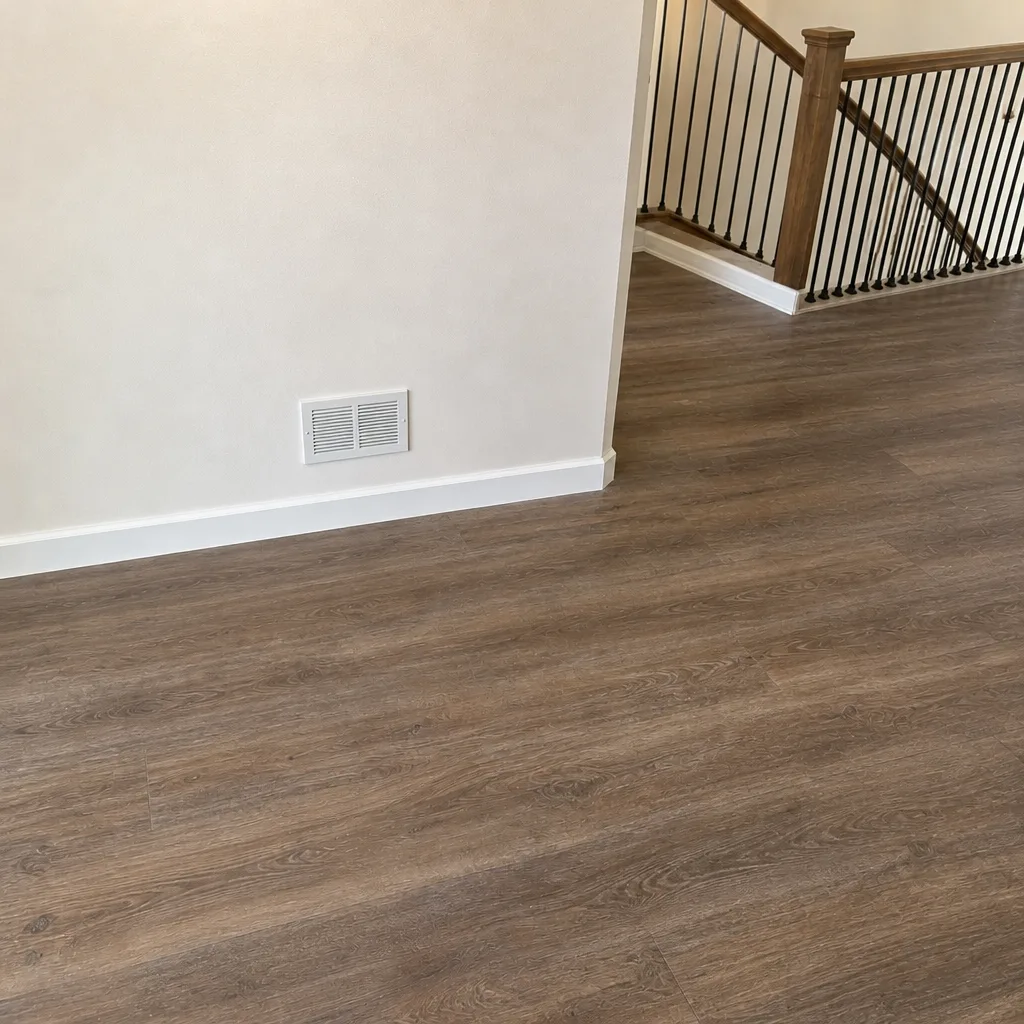 After
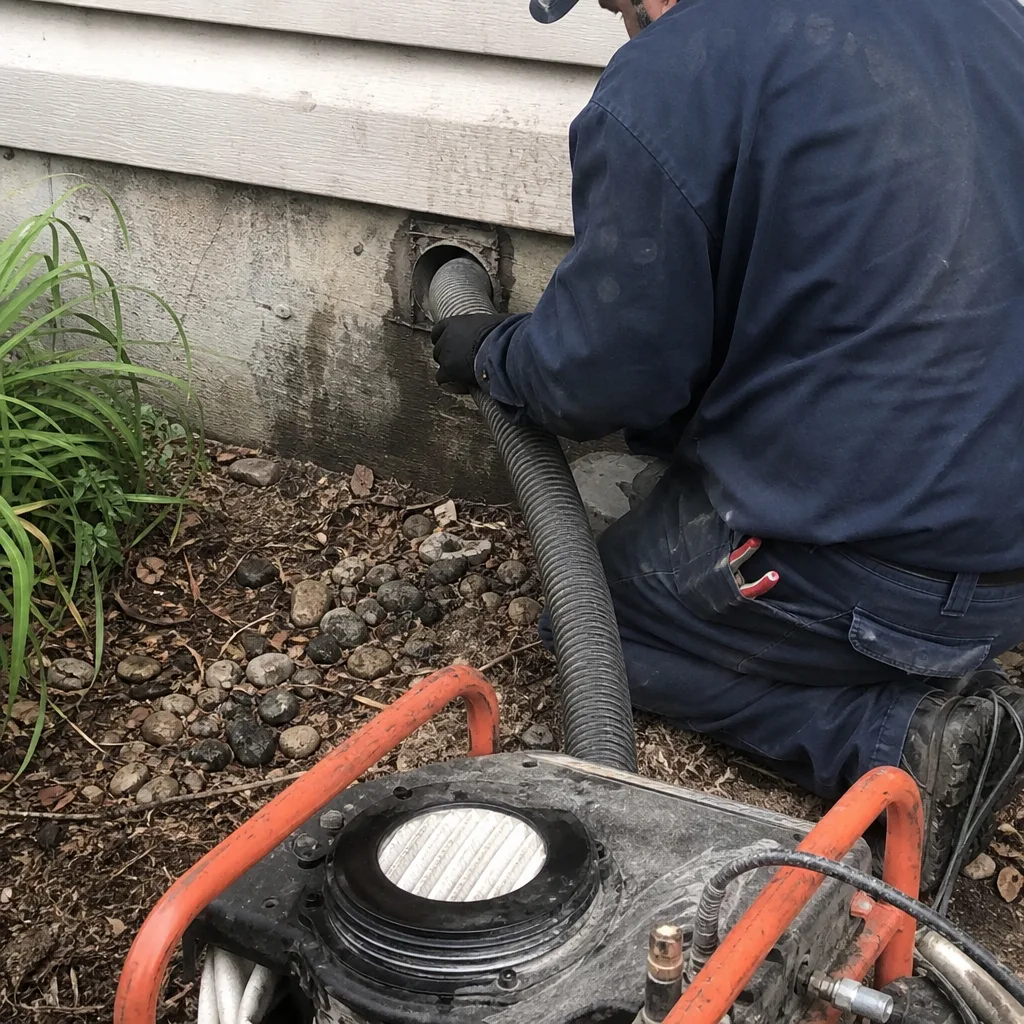 Before
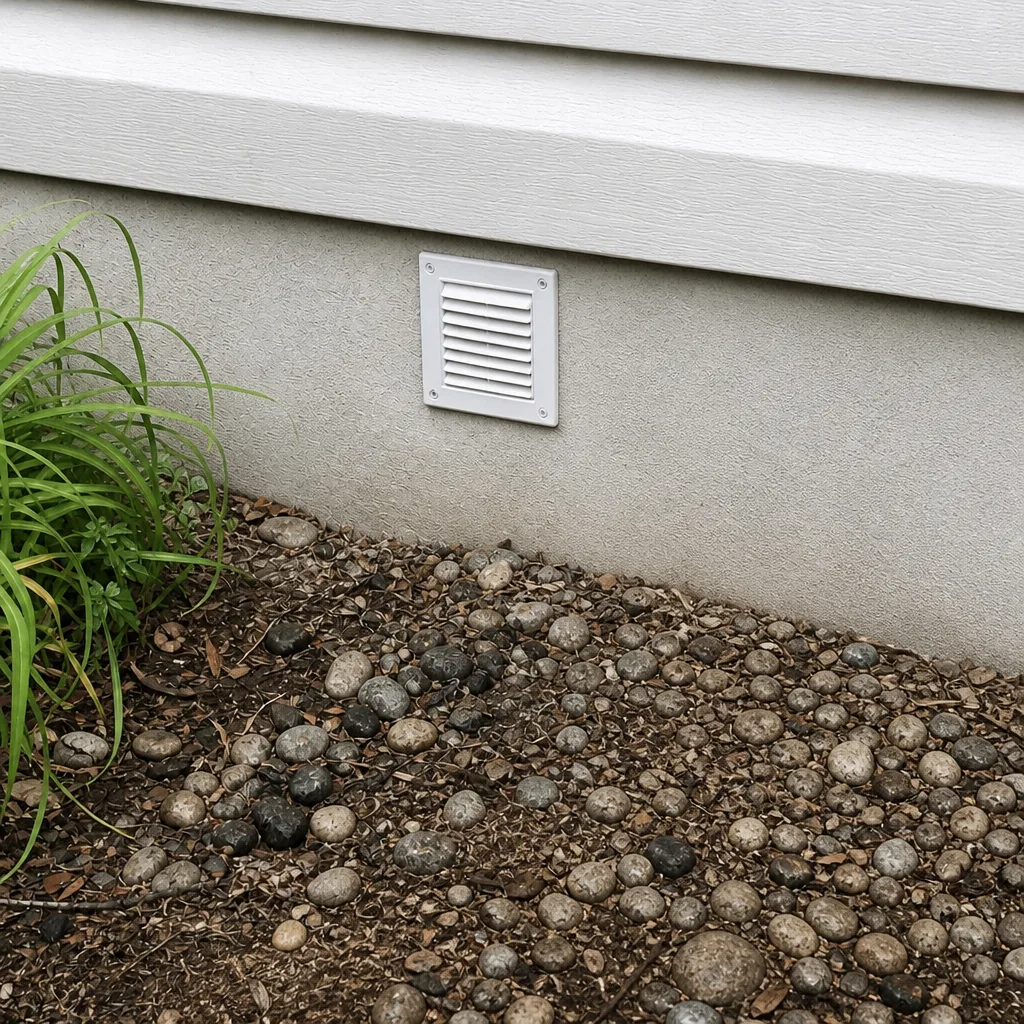 After
When to Call a Professional
Some cleaning jobs are obvious. Others hide in the system until something else breaks. Call a professional if anyone in your Lehi home has ongoing allergy or respiratory symptoms that seem tied to being indoors, if you’ve recently moved into a home and don’t know the last time the ducts were cleaned, or if you’ve finished a remodel that put drywall dust or construction debris into the air. A musty smell from the registers, visible dust streaks around vent grilles, or a heating system that runs longer than it used to are all worth a professional assessment. Pet owners, parents of young children, and anyone with an older home where the ductwork hasn’t been inspected should consider a cleaning and inspection together. Lehi Air Duct Cleaning offers free estimates in Lehi. Call (833) 513-8123. We answer 24/7. Fast dispatch from 7am to 7pm, Sunday through Friday.
Frequently Asked Questions
There isn’t one. The best-equipped contractors carry equipment from several manufacturers because no single brand leads across every category: Rotobrush for rotary brush cleaning, Abatement Technologies for negative-air containment, and Nikro for pneumatic and HEPA tooling. A contractor who carries only one brand is making a compromise somewhere in the job.
Most Lehi homes do fine with a professional cleaning every three to five years if there are no pets, no recent remodeling, and no allergy concerns in the household. Homes with heavy pet traffic, recent renovations, or family members with respiratory sensitivity often benefit from more frequent attention, and a professional assessment can tell you which category your home falls into.
Aeroseal is a duct sealing method, not a cleaning method. It injects an aerosolized sealant into the duct system to close leaks, while cleaning removes accumulated debris from the duct interior. A contractor who carries both capabilities can address leakage and debris in one visit, which is often the right call for homes with hot or cold rooms.
Yes, and it should come from your own system. Pre- and post-cleaning inspection camera footage is the only way to confirm the work was actually done to the depth promised. A legitimate contractor will run the camera without being asked and share the comparison with you.
Cheap quotes usually reflect a smaller equipment load-out: one machine, no inspection camera, no negative-air containment, no blower cleaning. That’s a partial job, and the parts left out are often the parts that matter most. A whole-system price, agreed in writing before work starts, gives you an honest comparison point. Call (833) 513-8123 for an exact quote. Estimates are free.
No, they’re separate services with different equipment and different safety considerations. Dryer vent cleaning addresses a leading cause of residential structure fires, and it’s worth booking as its own service whether or not you’re having ducts cleaned. Ask whether the contractor offers it as a dedicated service rather than a tack-on.
The Bottom Line
Choosing the right air duct cleaning brand in Lehi comes down to equipment breadth and technical candor. No single brand wins the trade; the contractors who do thorough work carry Rotobrush, Abatement Technologies, and Nikro because each excels at a different part of the job. Ask about negative air, ask about the camera, ask what happens to compromised ductwork and dirty blower wheels during the visit. The answers will tell you whether the contractor is bringing a full load-out or a coupon price. If you want those answers from us directly, call (833) 513-8123. We answer 24/7. Fast dispatch from 7am to 7pm, Sunday through Friday.
Written by the team at Lehi Air Duct Cleaning.