
Last updated November 25, 2026
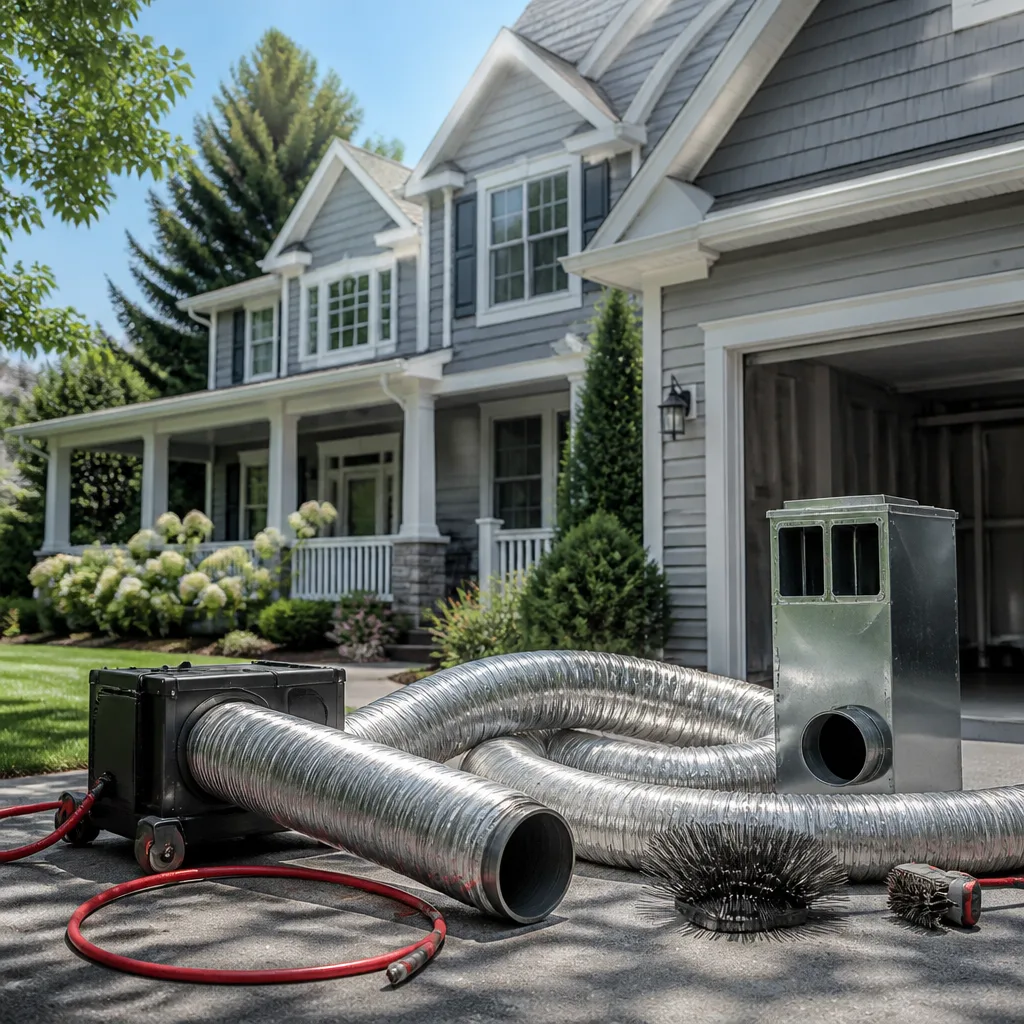 Whole-home duct cleaning
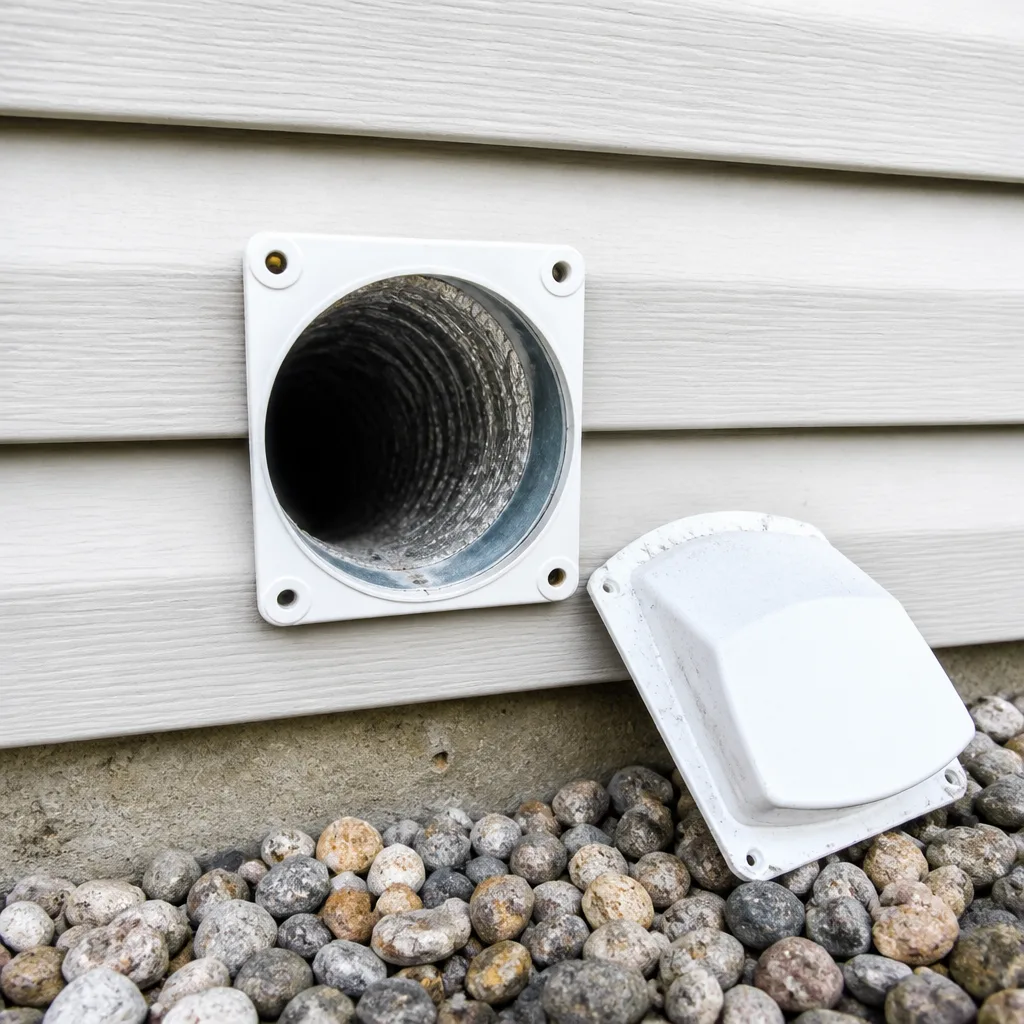 Dryer vent cleaning
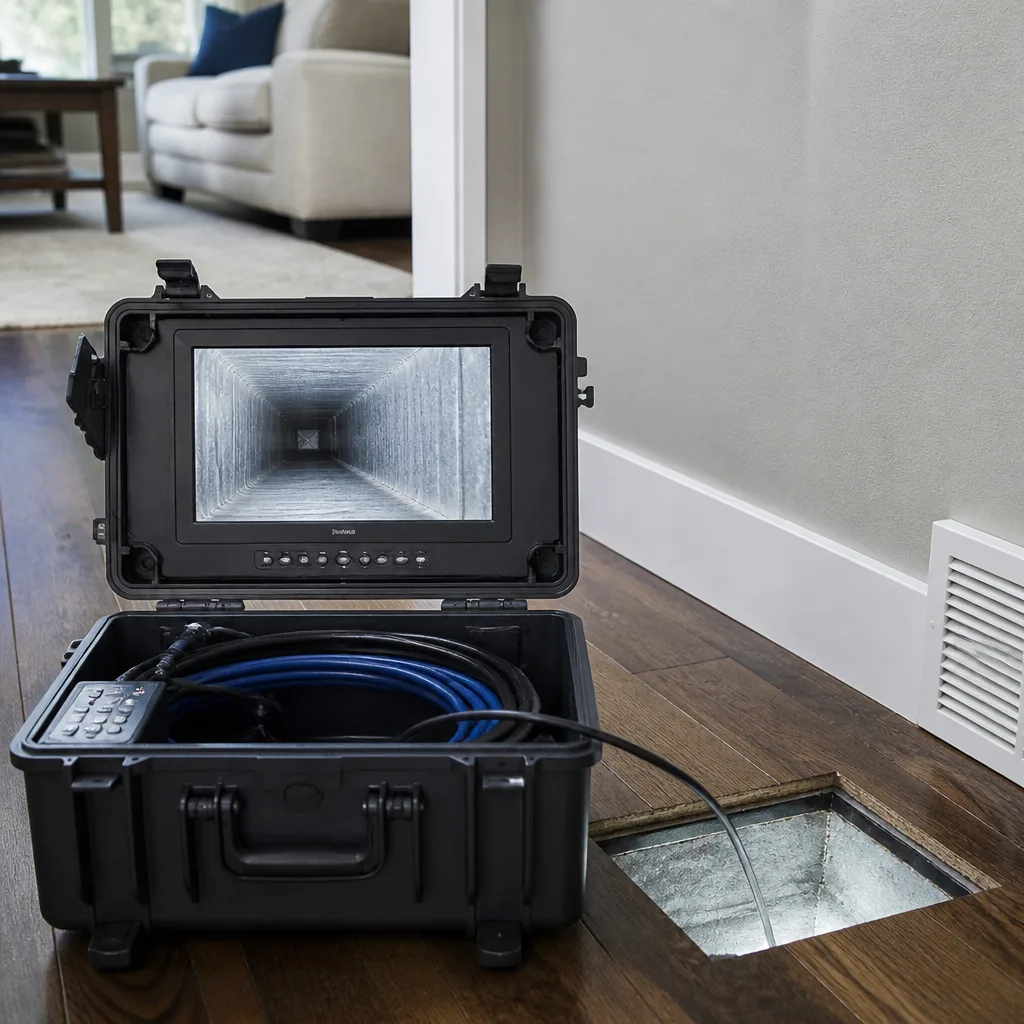 Camera inspection
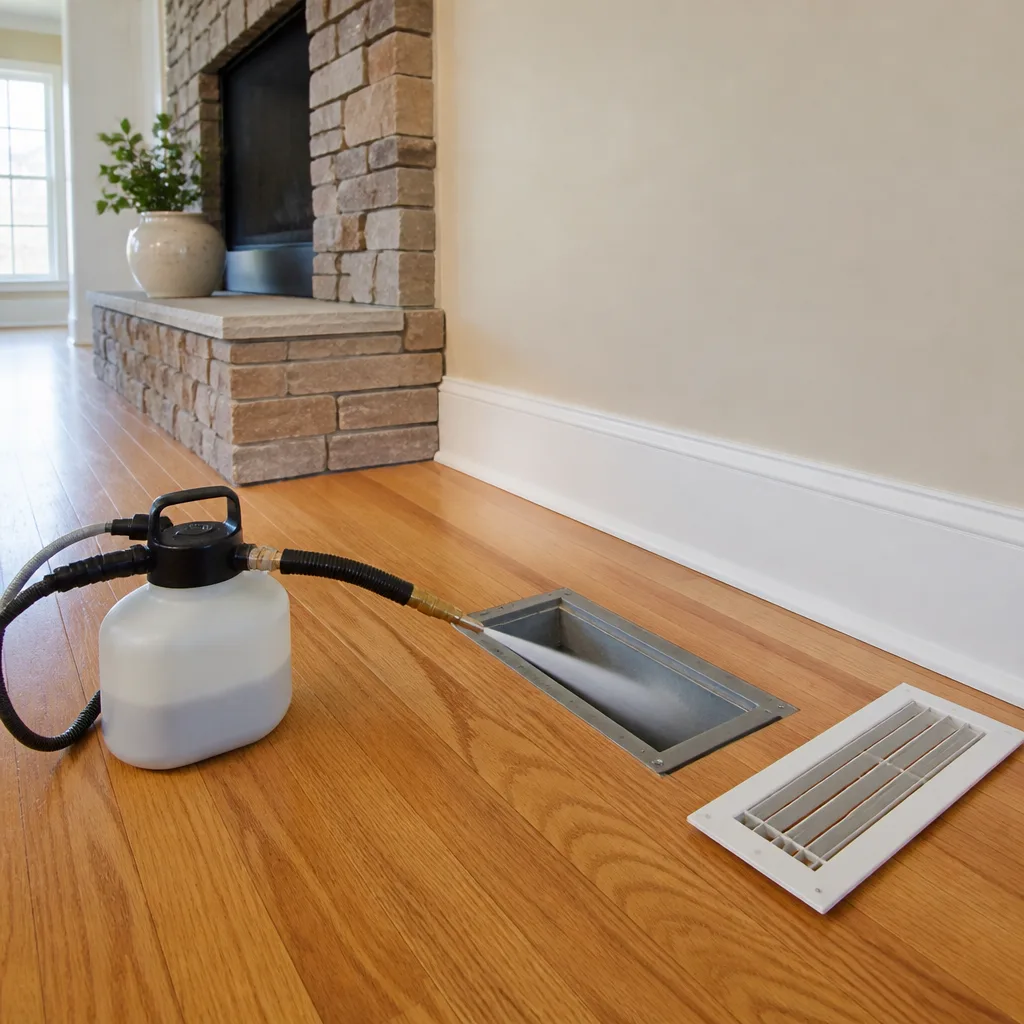 Sanitizing & deodorizing
Whole-system duct and dryer vent check with before-and-after photos - you see exactly what came out of your vents
That "$99 whole-house special" is a bait ad - the real number appears once they are in your hallway, or the "clean" is a shop-vac at the register. We photograph the inside of your ducts before and after instead.
Air Duct Cleaning Emergency Preparedness Guide for Lehi Homes
Most Lehi homeowners think about duct cleaning as a maintenance item, something you get to eventually. That’s the wrong frame. In Utah Valley, your duct system is the one thing standing between an outdoor air emergency and the air your family breathes in every room. During the wildfire smoke events that have rolled through the valley in recent summers, the homes that escaped heavy contamination had one thing in common: someone walked to the thermostat and made a single, deliberate adjustment before the smoke settled in. The homes that didn’t filled every duct with particulate. This guide is about what to do with your HVAC system during and after the emergencies that actually happen here: smoke events, flash floods in lower subdivisions, and the dust storms that roll off the valley floor. You’ll learn the exact thermostat settings to use, when duct cleaning becomes mandatory versus when it can wait, and what to document if a contaminated system turns into an insurance claim.
Quick Answer
When wildfire smoke, a dust storm, or a flood affects your Lehi home, the first move is to stop your HVAC system from pulling contaminated outdoor air through the return ducts. Switch your thermostat fan from AUTO to CIRCULATE or OFF, keep windows closed, and change the filter once the event passes. After the air clears, assess whether contamination reached the ducts themselves or only loaded the filter, and call for an inspection if you smell smoke indoors or see visible residue at the vents. Duct cleaning is mandatory after a flood reaches the ductwork, and it can usually be deferred after a smoke event unless the system was running throughout.
Styles & brands we work with
- Whole-home duct cleaning
- Dryer vent cleaning
- Camera inspection
- Sanitizing & deodorizing
Table of Contents
- Wildfire Smoke and Inversion Events: The Three Thermostat Settings That Matter
- Post-Flood Protocol for Homes Near the Jordan River Corridor
- Dust Storm Aftermath: Filter Load or Full System Penetration?
- New Construction Cleanup in Lehi’s Growth Corridor
- What to Document for Insurance After Duct Contamination
- Why Equipment Choice Changes the Outcome After an Emergency
- Pre-Season Preparedness: What to Do Before the Next Event
Wildfire Smoke and Inversion Events: The Three Thermostat Settings That Matter
When wildfire smoke settles over Utah Valley, the instinct is to seal the house and wait it out. That’s half right. The problem is that a running HVAC system turns your return ducts into a vacuum that pulls outdoor smoke in through every leak and gap in the ductwork, then distributes it to every room at once. The specific thermostat adjustments below are what separates a house that comes out clean from one that needs a full duct cleaning afterward.
These are the three settings to make the moment smoke or an inversion alert reaches Lehi:
- Fan mode to OFF or CIRCULATE – never ON. The AUTO setting runs the fan only when heating or cooling calls for it. The ON setting runs it continuously, which is exactly what you do not want during a smoke event. If your thermostat has a CIRCULATE option, that runs the fan in short bursts and is the best choice when you still need some air movement.
- Fresh-air intake closed. Some newer homes in Lehi have a fresh-air damper tied to the HVAC system. If yours does, close it manually or through the thermostat’s fresh-air control so the system stops drawing outdoor air. This is the single most overlooked setting in smoke events.
- Filter upgraded for the event. A high-MERV filter captures far more smoke particulate, but check that your system’s blower can handle the restriction before you install one. If you’re unsure, a mid-range filter is safer than a blower that strains under a filter too dense for it.
Once the smoke clears, leave the fan on CIRCULATE for a few hours to move filtered air through the house, then change the filter. Smoke events do not automatically mean your ducts are contaminated. If the system was off or in CIRCULATE throughout the event and you smell no smoke indoors afterward, a filter change is often enough. If the system ran continuously with the fresh-air intake open, smoke has likely reached the ducts and an inspection makes sense. The same logic applies to the winter inversion events that trap cold air and particulate over the valley: the fan is the variable you control.
One note on fire safety that comes up in every preparedness conversation: your clothes dryer vent is a separate fire risk that many duct cleaners skip entirely. If you’re doing an emergency readiness pass on the house, adding dryer vent cleaning to the list closes a gap that has nothing to do with air quality but everything to do with home safety.
We answer 24/7 if you’re unsure whether the contamination in your system warrants a call. Fast dispatch from 7am to 7pm, Sunday through Friday.
Post-Flood Protocol for Homes Near the Jordan River Corridor
Flash flooding in Lehi hits lower subdivisions hard, and the homes most exposed are the ones in the lower elevations near the Jordan River corridor and the drainage channels that feed it. When water reaches a home’s crawl space or the lower level where ductwork runs, the question isn’t whether to clean the ducts. It’s how fast, and what else has to happen first.
The rule is simple: if floodwater reached the ductwork, duct cleaning is not optional. Wet or contaminated ducts that are simply dried out and put back into service become a source of mold and bacteria that gets distributed to every room the system serves. Cleaning can be deferred in some scenarios, but flood contact is not one of them. Here’s the sequencing that matters:
- Stop running the system. A flooded HVAC system running with water in the ductwork or the air handler spreads moisture and contamination through the whole house. Shut it down at the thermostat and the breaker if you can reach it safely.
- Document before you clean up. Photos of water lines, wet duct insulation, and any visible debris are the record your insurer will want. Take more than feels necessary.
- Have the system inspected before it goes back on. The air handler, the blower, and the duct interior all need assessment. Water that entered through foundation vents or crawl space openings often carries silt and organic material that stays in the ducts long after the visible water is gone.
- Clean, then repair and seal. Ducts that were submerged or saturated often have compromised connections and insulation that cleaning alone won’t fix. Sealing after cleaning closes the gaps that let future moisture in.
For homes that only saw minor water intrusion at the foundation without reaching the ductwork, the assessment can wait for a regular appointment. The line between “defer” and “mandatory” is whether water physically contacted the ducts or the air handler. If it did, treat it as mandatory and get it inspected. If it didn’t, change the filter, watch for odor, and schedule a routine air duct cleaning when things settle.
Dust Storm Aftermath: Filter Load or Full System Penetration?
Dust storms along the valley front are the quietest of the three emergencies because there’s no fire and no water. A storm that kicks up fine dust and pushes it against a home for hours can do one of two things: load the filter without getting into the ducts, or penetrate the system through leaky return ducts and distribute dust through every room. Telling which one happened determines whether you need a filter change or an inspection.
Here’s the assessment sequence:
- Check the filter first. Pull the filter and hold it up to light. A uniformly gray or brown filter that’s clogged but structurally intact means the filter did its job. Dust in the return plenum behind the filter, or dust visible at supply vents in rooms, points to penetration.
- Look at the return ducts. Unsealed return ducts in attics, crawl spaces, and wall cavities are the most common point of entry. Check the joints where return ducts connect to the air handler and to the return grilles, especially in older homes or homes with ductwork run through unconditioned space.
- Watch for dust settling in rooms. If a room that was closed off gets a fresh layer of dust after the storm, the system likely pulled dust in and pushed it out. That’s penetration.
- Smell for the difference. A filter that loaded but didn’t penetrate produces no interior odor. A system that pulled dust through the ducts often has a slight musty or dusty smell at the supply vents for days.
Filter load alone requires a filter change and nothing more. Penetration requires cleaning and, just as important, sealing the return ducts so the next storm doesn’t repeat it. In our experience, dust storms exposed the value of HVAC cleaning to a lot of Lehi homeowners in a way no maintenance reminder ever did. The air handler itself can collect dust on the blower wheel and evaporator coil, and that load doesn’t clear with a filter change.
New Construction Cleanup in Lehi’s Growth Corridor
Lehi has added thousands of new homes in recent years, and the buyers moving into them often discover that “new” doesn’t mean clean. Drywall dust, construction debris, sawdust, and the fine particulate from framing and finishing settle into the duct system before the home is even closed up. Moving into a freshly built home without addressing that load means breathing construction dust from your first day in it.
The scenario is common enough that it belongs in any emergency preparedness guide. Construction debris in ducts isn’t an emergency in the same sense as a flood, but the window to clean it before the family moves in is short. Once furniture is set and kids are sleeping in the rooms, the ducts are running, and the contamination is circulating.
Here’s when to insist on cleaning before move-in:
- The home had visible construction dust on surfaces when you first walked it, especially in rooms where return grilles sit low or in walls.
- Ductwork was delivered and installed before the drywall and finishing work was complete, which is the normal sequence in most new builds.
- You can see debris or a gritty film inside a supply vent with a flashlight.
- The home has a newer high-efficiency HVAC system with an air handler and coil assembly that collects construction dust and needs to be cleaned, not just the ducts.
Builders and their mechanical contractors typically run a quick pass during construction, but a quick pass is not a full system clean. Rotobrush and Nikro mechanical cleaning, run through each branch of the system, removes what a quick pass leaves behind. Insist on a cleaning before move-in, and if the builder pushes back, ask for a written statement of what was cleaned and what was not.
What to Document for Insurance After Duct Contamination
When a smoke event, flood, or storm contaminates your duct system, the difference between a covered loss and a denied one usually comes down to documentation. Insurers don’t cover duct contamination because it’s ordinary maintenance; they cover it because it’s the direct result of a discrete event with dates, photos, and evidence of the event’s reach. Here’s what to capture, and when.
- Photos of the event itself. Outside conditions during and after – smoke visible in the air, water lines on the home, dust on exterior surfaces – establish that the event reached your property.
- Photos of the interior. Water lines in the crawl space, dust on window sills, smoke smell or visible residue at vents, and the state of the filter when you pulled it. Use a timestamp if your phone supports it.
- Air quality readings. If you have an indoor air quality monitor, save the readings from before, during, and after the event. These are increasingly persuasive to adjusters because they show the system’s behavior changed.
- The filter itself. Keep the filter that loaded during the event. It’s physical evidence of what your system captured.
- Dates and durations. When the event started, when it ended, and whether the HVAC system was running throughout. A log line or two is enough.
- The written inspection and estimate. A documented assessment of the duct interior and the air handler gives your insurer something concrete to review.
Our technicians have up to 8 years of experience with post-event assessments, and a documented inspection is the part homeowners most often skip. Call (833) 513-8123 for a free estimate and a written record you can hand to your insurer. Estimates are free and the price is set per job by the written estimate.
Why Equipment Choice Changes the Outcome After an Emergency
Duct cleaning after a real contamination event is not a shop vac job. What gets loosened inside a duct during cleaning has to go somewhere, and in a professional job, it goes into a capture system, not back into the room. That distinction matters most after an emergency when the contamination is heavy, adhesive, or partly biological.
We run Rotobrush and Nikro mechanical cleaning systems, the same class of equipment used in commercial HVAC and restoration work. Rotobrush uses a rotating brush and high-volume vacuum together so the dislodged debris stays in the airstream and gets carried out, not deposited in the next room. Nikro handles the specialty cases: heavy debris loads, dryer vent runs, and the mechanical agitation that tight or irregular ductwork needs.
Containment is the other half. Abatement Technologies negative-air equipment pulls the working area into a slight negative pressure so any dust that escapes the cleaning tool is captured at the source. In a post-flood or post-smoke job, that capture is what keeps a heavy contamination load from becoming a house-wide dust event. It’s the same reason restoration crews use negative-air machines on water and mold jobs.
And cleaning is only the first half of the job. If the ducts leak, the next storm finds its way back in. Repairing and sealing weak joints and connections after cleaning is what makes the work last. Once the system is clean and tight, moving to a long-term air quality solution is a logical next step, which is why we’re authorized to sell and install Honeywell and Aprilaire air quality systems. A whole-house filter or a humidity control system doesn’t fix a dirty duct, but it helps a clean system stay clean longer. One call handles the whole air pathway from the blower to the vent, which is the advantage of working with a company that covers Lehi air duct cleaning and everything that touches it.
Pre-Season Preparedness: What to Do Before the Next Event
The best time to prepare your duct system for an emergency is when there isn’t one. A few things done ahead of the next smoke event, flood season, or dust storm turn a bad situation into a manageable one.
- Know your thermostat’s settings before you need them. Find the fan mode, CIRCULATE option, and fresh-air control while the air is clear. Looking these up during a smoke event is the wrong time to learn your system.
- Filter stock. Keep spare filters of the correct size and MERV rating at home. After a smoke event or dust storm, filters are in short supply across the whole valley at exactly the moment you need one.
- Inspect your return ducts. Unsealed return joints in attics and crawl spaces are the entry point for smoke and dust. Have them inspected and sealed before the season, not after.
- Schedule a system assessment annually. A cleaning and inspection before the fire season and before winter inversion season catches problems when the schedule is open. An air handler full of dust and a return duct with a gap are easier to fix when the calendar is clear.
- Document your system now. Photos of the air handler, the ducts, and the vents before an event give you a “before” reference for any future claim.
Pre-season work is also when it makes sense to think about long-term air quality. Honeywell and Aprilaire systems – whole-house filtration, humidity control – are far easier to plan and install when the house isn’t in the middle of a smoke event. Our technicians have up to 8 years of experience with these systems and with the mechanical cleaning that keeps them working. Guardsman and Abatement Technologies products round out the toolkit when a job calls for them.
Common Mistakes to Avoid
- Running the fan continuously during a smoke event. The ON setting runs the blower nonstop and pulls outdoor air through every leak in the system. Use AUTO or CIRCULATE instead, and close the fresh-air intake if you have one.
- Cleaning the ducts after a flood without fixing the moisture source. Cleaning a wet duct system and putting it back into service redistributes contamination and can grow mold in the ducts. Stop the system, dry it, inspect it, then clean.
- Assuming a new build is clean. Fresh construction means construction dust, drywall particulate, and debris in the ducts. Have the system cleaned before move-in, not after the family is settled.
- Skipping the sealing step. Cleaning without repairing loose joints and leaks leaves the system ready for the next storm to contaminate it again. Cleaning and sealing belong together.
- Throwing away the filter before a claim. The loaded filter is your evidence. Photograph it, keep it, and then replace it.
- Using a shop vac or consumer-grade equipment for post-event cleaning. Consumer vacuums don’t capture fine particulate, and they can redistribute it through the room. Professional-grade equipment with negative-air containment is what handles a heavy load.
- Waiting until the event to look up how the thermostat works. Knowing the fan modes and fresh-air control before the smoke or dust arrives is the difference between a filter change and a full cleaning afterward.
See the difference
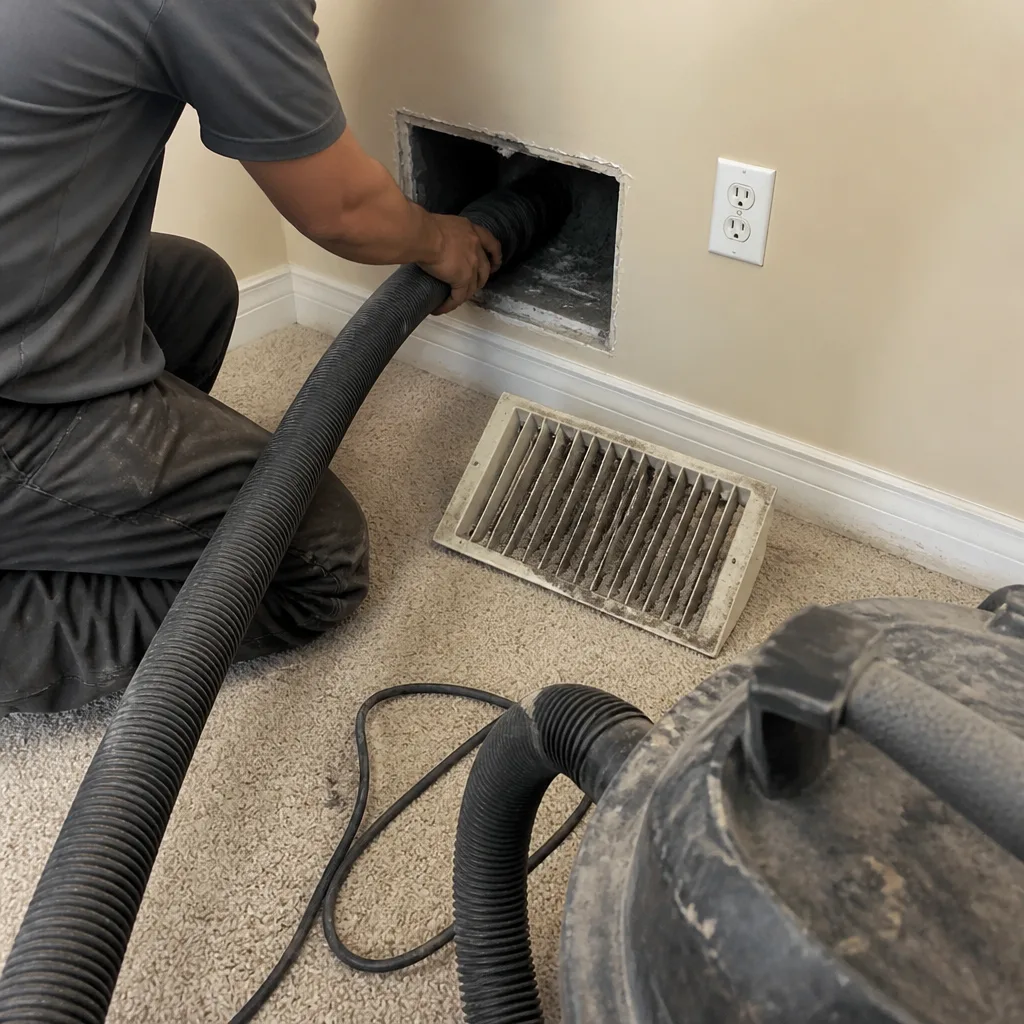 Before
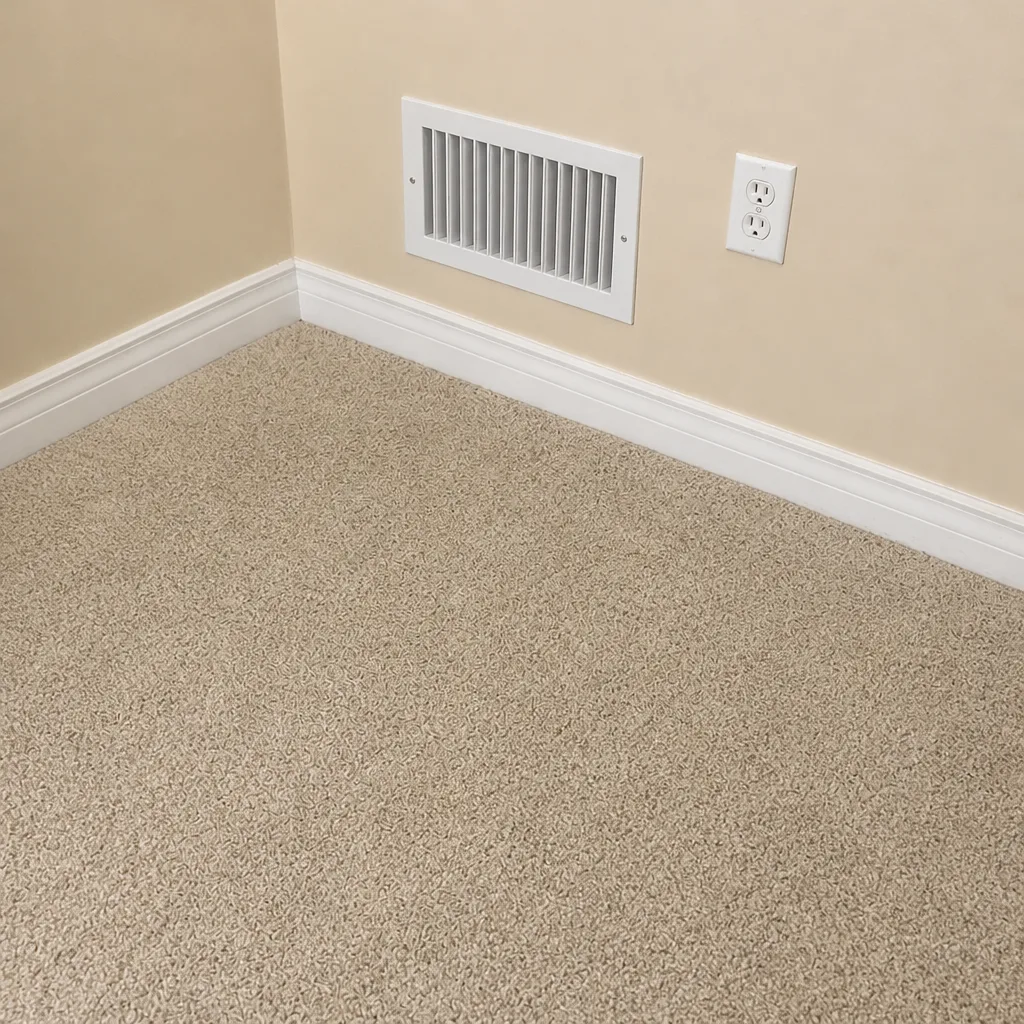 After
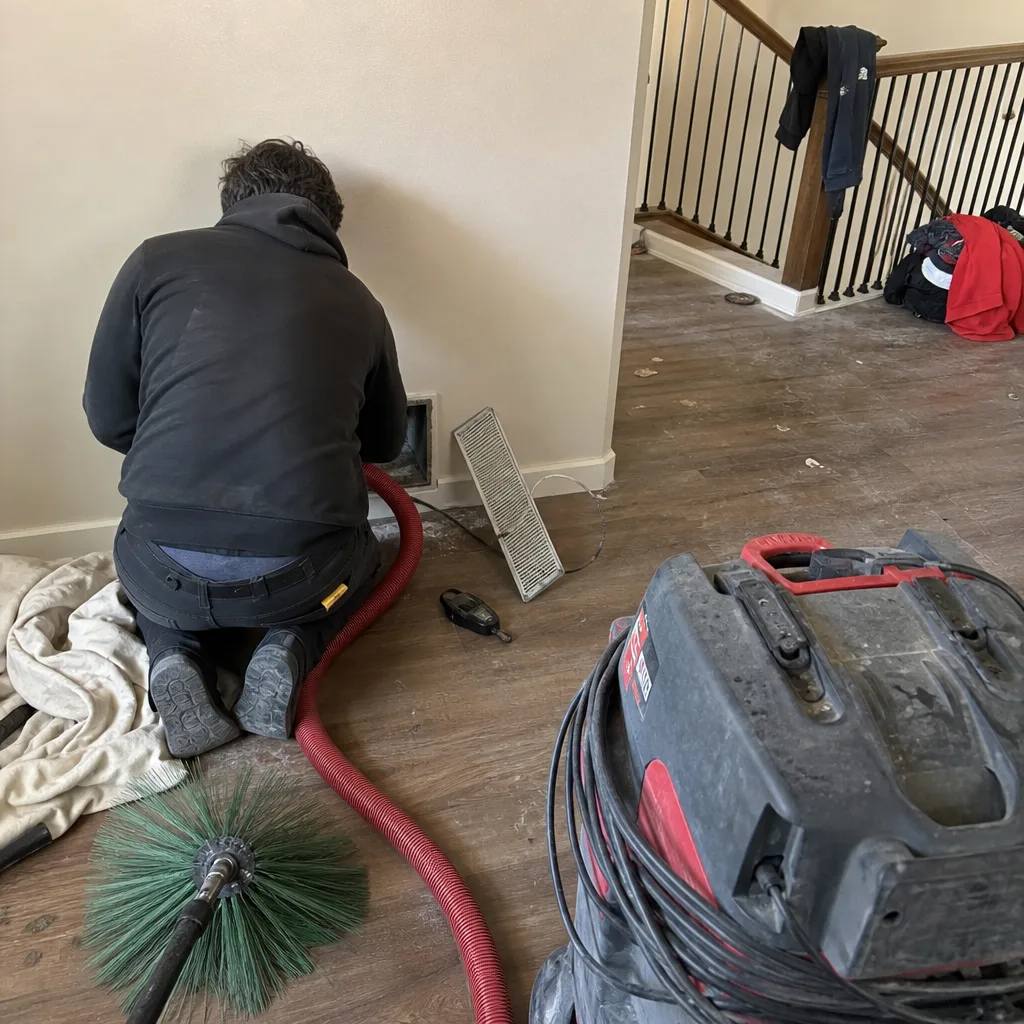 Before
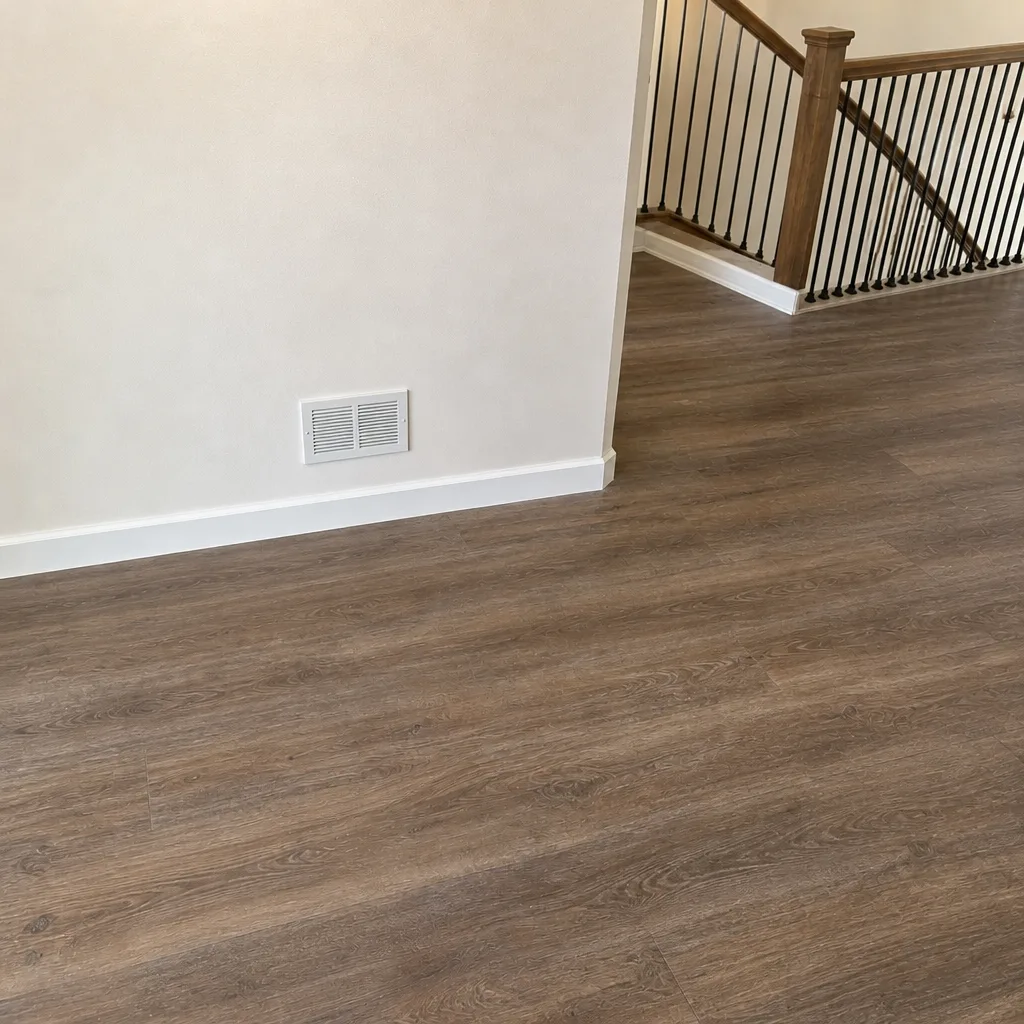 After
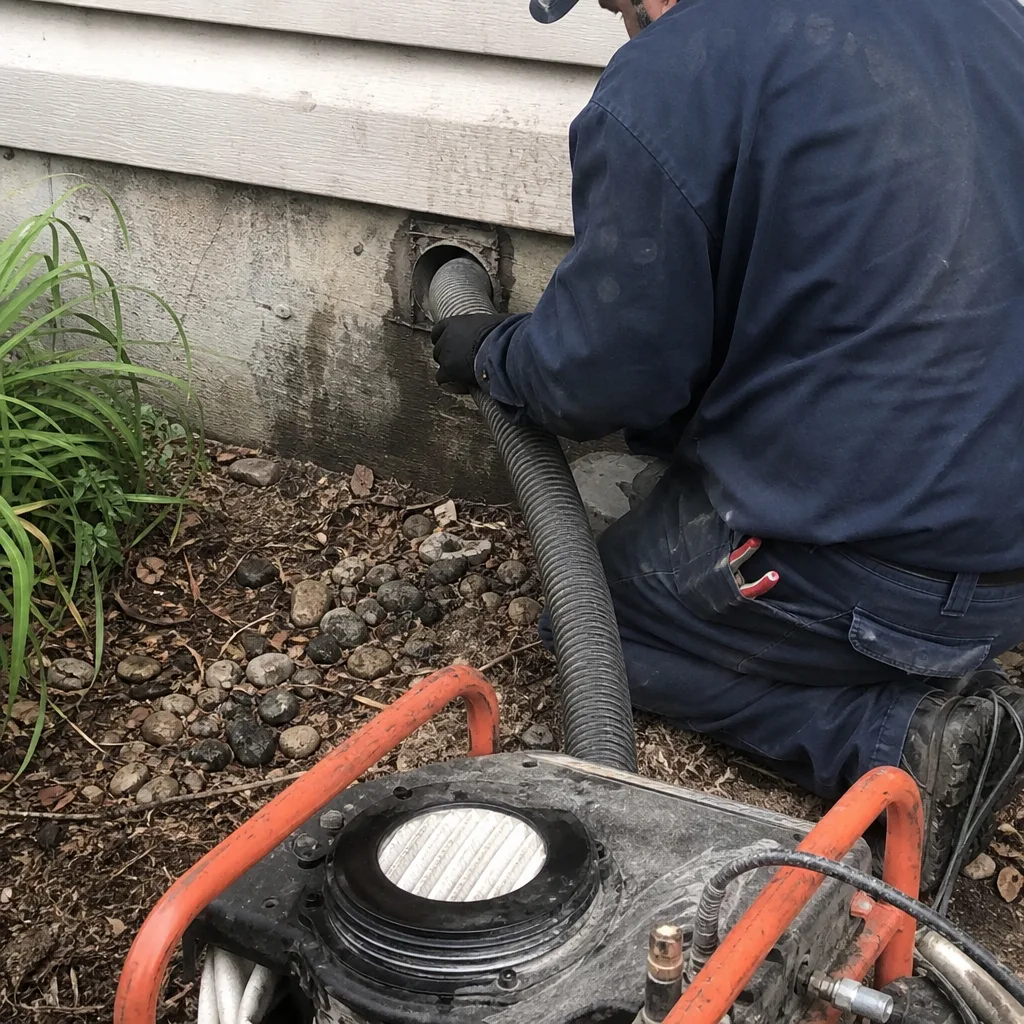 Before
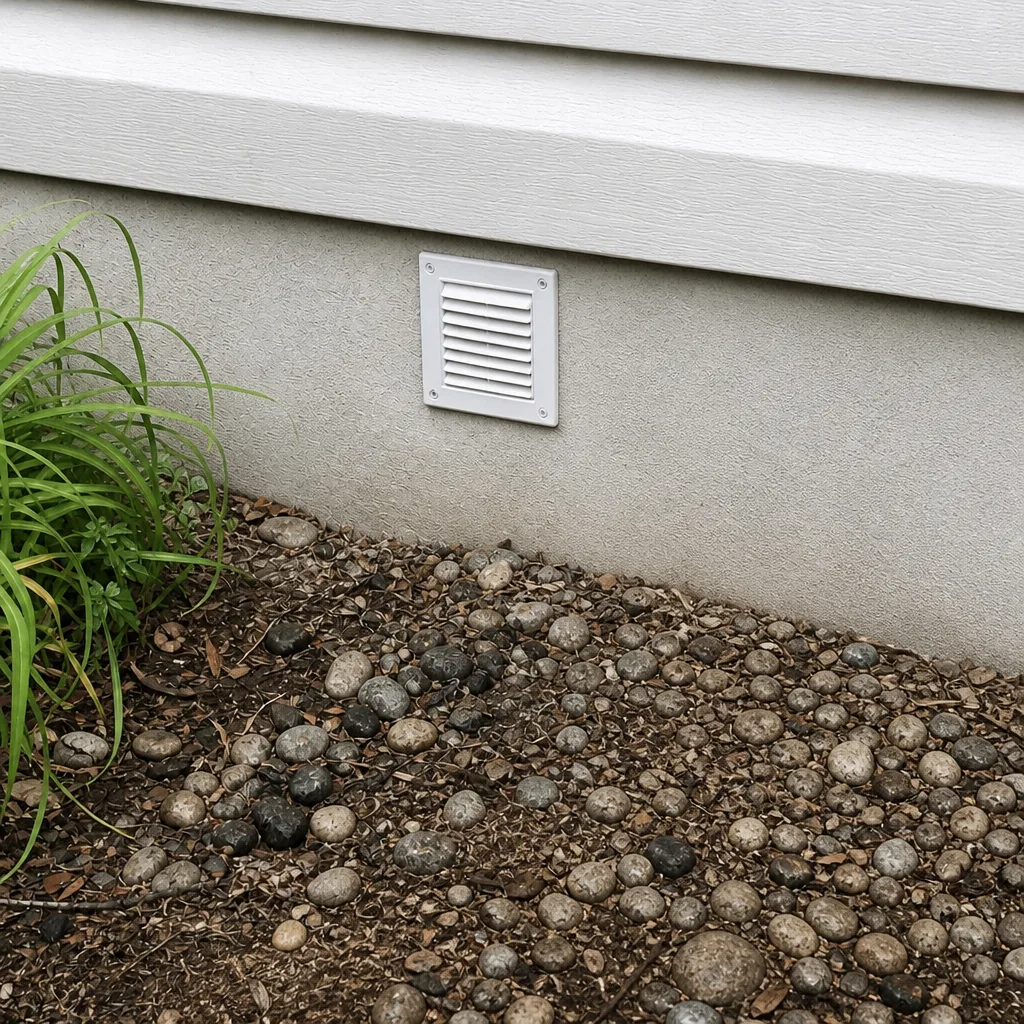 After
When to Call a Professional
Some post-event situations call for an inspection rather than a do-it-yourself filter change. If floodwater reached your ductwork or air handler, that’s a professional job from the start. If wildfire smoke reached the interior of your ducts, if the system ran continuously with the fresh-air intake open during a smoke event, if a dust storm left visible debris at your supply vents, or if a recent move-in home has construction grit in the ducts, an inspection makes sense. And if your ducts leak in the first place, sealing is a job for a technician with the tools to find the gaps. Lehi Air Duct Cleaning offers free estimates in Lehi – call (833) 513-8123. We answer 24/7. Fast dispatch from 7am to 7pm, Sunday through Friday. A call outside dispatch hours is booked into the next opening. Estimates are free and the price is set per job by the written estimate.
Frequently Asked Questions
Not always. If your system was off or in CIRCULATE during the smoke event and you smell no smoke indoors afterward, a filter change may be enough. If the system ran continuously with the fresh-air intake open, or if you smell smoke at the vents, an inspection is warranted. Call (833) 513-8123 for a free estimate and a straightforward answer.
Set the fan to AUTO or CIRCULATE, not ON, and close the fresh-air intake if your system has one. Running the blower continuously pulls outdoor dust through every leak in the return ducts. After the storm passes, check the filter and inspect the return joints for gaps. Call (833) 513-8123 if the system pulled dust into the house.
Yes, if floodwater reached the ductwork or the air handler. Water contact with ducts creates a contamination source that cleaning cannot defer. If water only reached the foundation without contacting the ducts, the system can usually be inspected on a regular schedule. Call (833) 513-8123 for an assessment.
It’s worth having the system cleaned before move-in. Construction dust, drywall particulate, and debris settle into ducts during the build, and the builder’s quick pass is not a full clean. Moving in first just means living with the debris in the air. Call (833) 513-8123 for a free estimate.
Photograph the event conditions outside, the interior damage, and the loaded filter. Save any indoor air quality monitor readings, and log the dates when the event started and ended. Keep the filter itself. A written inspection and estimate make the claim far easier to process. Call (833) 513-8123 for a documented assessment.
Yes. Leaky return ducts in attics and crawl spaces are the most common entry point for smoke and dust. Cleaning and sealing together is what keeps the system clean after the next event. Repair and sealing are part of our full-system service. Call (833) 513-8123 for a free estimate.
The Bottom Line
The emergencies that affect Lehi homes are predictable even if the exact timing isn’t: smoke events, dust storms, and floodwater in lower subdivisions. Preparing your duct system for them is mostly about knowing the settings on your thermostat and sealing the leaks that let contamination in. After an event, the question is whether the contamination reached the ducts or just the filter; the answer determines whether you need a filter change or a full cleaning. Documentation is the piece most homeowners skip, and it’s the piece insurers ask for first. Cleaning and sealing the full air pathway from the blower to the vent is the work that makes a system ready for the next one. Call (833) 513-8123 for a free estimate. We answer 24/7. Fast dispatch from 7am to 7pm, Sunday through Friday.
Written by the team at Lehi Air Duct Cleaning.