
Guardsman Air Duct Cleaning in Lehi: A Homeowner’s Guide
When a company says they use “Guardsman equipment,” that tells you about the vacuum side of the job. It says nothing about how they’re agitating debris loose from duct walls before that vacuum pulls it out. That single gap is where most duct cleaning disappoints homeowners in Lehi: a powerful machine connected to a system nobody actually scrubbed. Guardsman air duct cleaning can be genuinely effective, or it can be a very loud vacuum pulling air through dirty ducts. This guide explains what the equipment does, where it falls short alone, and what questions to ask before you book.
If you’d rather not sort through the details yourself, call (833) 513-8123 and we’ll walk you through what a complete job involves for your home.
What Does Guardsman Equipment Actually Do?
Guardsman units are high-capacity vacuum systems. They come in truck-mounted and portable configurations, and their job is to create sustained negative pressure inside the duct system while trapping what gets loosened. That’s the whole mechanical purpose. The vacuum isn’t cleaning the ducts; it’s capturing debris that something else dislodges.
Several things determine whether that capture works:
- Airflow capacity (CFM). Higher cubic-feet-per-minute ratings maintain stronger negative pressure as the system is worked, so loosened debris moves toward the collection point instead of settling back onto duct surfaces.
- Filtration and containment. The vacuum needs a proper collection and filter stage. Without it, fine particulate blows through and lands back in living space.
- Connection point. A proper setup ties into the system at a main trunk or the air handler, not at one register while the rest of the house leaks air back in.
- Sealing during the job. Registers and returns that aren’t blocked let the vacuum pull from the room rather than the ducts, which cuts the effective pressure inside the system.
Notice what’s missing from that list: anything that touches the duct walls. Guardsman equipment establishes the conditions for cleaning. It doesn’t perform the cleaning. For homeowners in Lehi comparing quotes, that distinction is the whole ballgame. Our technicians have up to 8 years of experience, and the first thing we look at on any Guardsman setup is what agitation tools are paired with it.
The Agitation Gap: Why Vacuum Alone Leaves Debris Behind
Dust, pet dander, and lint don’t sit loose in a duct. They bond to the walls, especially on the slightly damp interior surfaces of flex duct and near the air handler where temperature swings cause condensation. A vacuum pulling steady air through a duct will lift the loose stuff. It won’t pull bonded debris off a wall any more than a shop vac pulls dried paint off a floor.
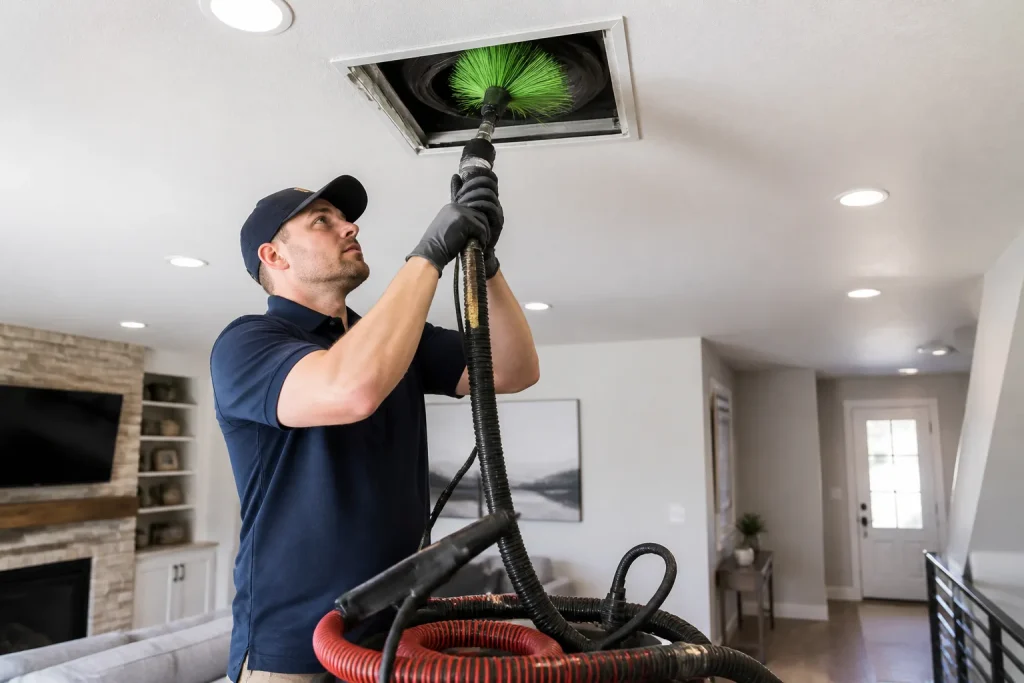
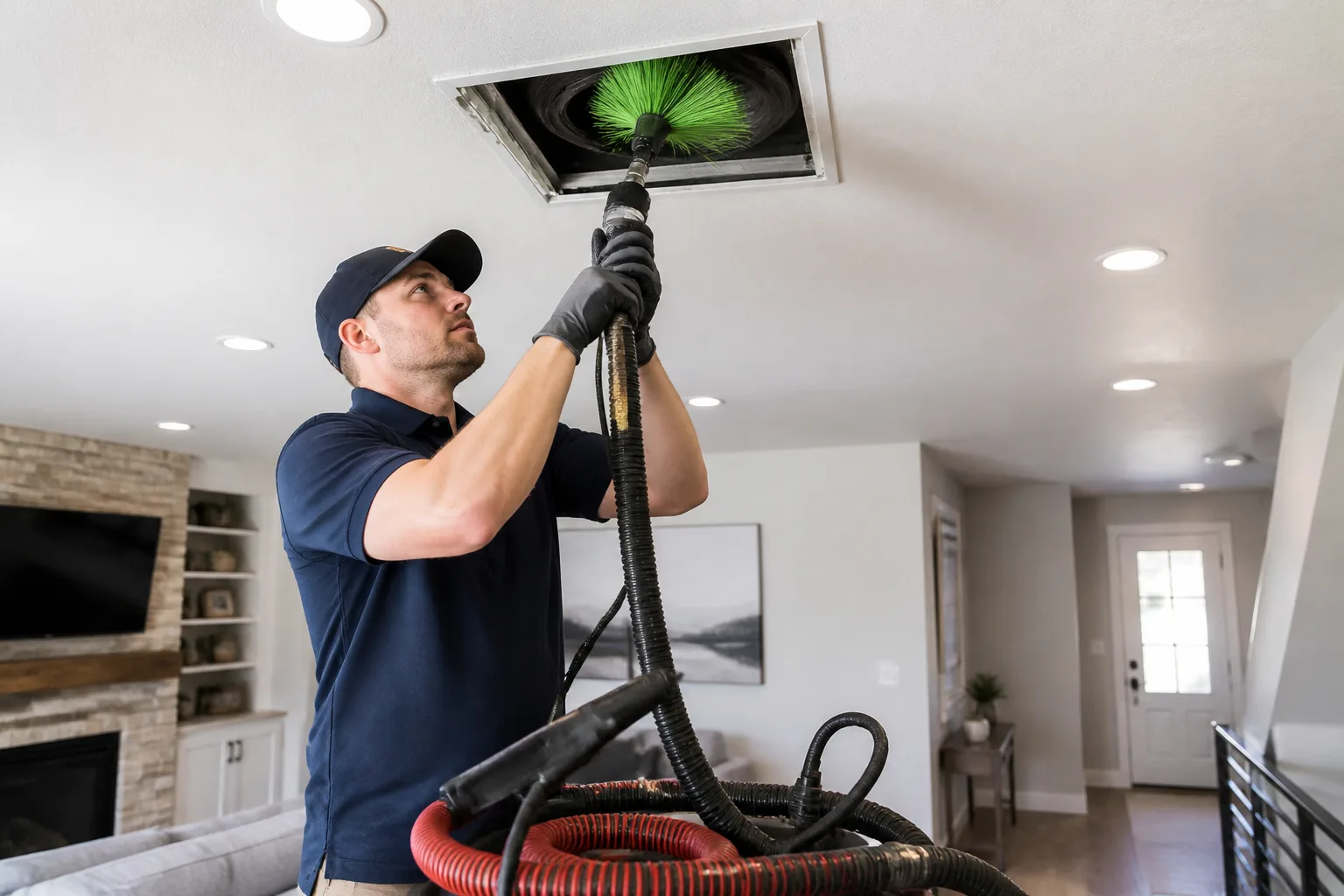
Real agitation comes from mechanical tools: rotary brushes sized to the duct, compressed-air whips that scour the interior, and hand tools for the awkward sections. That agitation breaks the bond, kicks the debris into the air stream, and the Guardsman vacuum catches it. Skipping that step is common because it’s slower and requires more equipment. A company with one vacuum and a hose can be in and out fast. Fast is not the same as clean.
The sections that suffer most when agitation is skipped:
- Register boots. The short angled transition between duct and vent is a debris trap and one of the hardest spots to reach with vacuum alone.
- Flex duct runs. The corrugated ribs hold material, and a brush has to be matched to the duct diameter so it doesn’t damage the liner.
- The air handler cabinet. The blower compartment and coil area collect debris that never sees a duct brush at all.
- Fiberboard duct. This material needs gentler agitation because aggressive brushing can fray the interior surface.
When we perform air duct cleaning in Lehi, we pair professional vacuum equipment with Rotobrush and Nikro mechanical cleaning systems specifically so bonded debris comes off the walls. A vacuum without that pairing is a half-finished job that sounds finished.
Guardsman vs. Rotary Brush Systems: Which Fits Your Ducts?
This isn’t a contest. The two approaches solve different problems, and a complete job uses both. Guardsman-based negative pressure handles containment and capture. Rotary brush systems like Rotobrush handle the physical removal of bonded debris. Comparing them directly is a bit like asking whether a shop vac or a scrub brush cleans a dirty floor. You want the brush to loosen it and the vacuum to take it away.
Where the comparison gets practical is duct material:
- Sheet metal. Durable and forgiving. Rotary brushes work well here, and the smooth interior releases debris easily once agitated.
- Flex duct. The most common residential duct in Lehi-area homes, and the most sensitive. Brush size has to match the duct, and a company that only brings a vacuum is leaving ribbed surfaces dirty by default.
- Fiberboard. Requires gentler tooling. Aggressive brushing damages the surface, so experience matters more than equipment brand here.
Ask any company which tools they’ll use on your specific duct material. If the answer is only “Guardsman,” you’re getting containment without agitation. If the answer names both a vacuum and a mechanical cleaning system, that’s a company thinking about the whole system.
Questions to Ask Any Guardsman-Using Company
Before you book, four questions separate a complete job from a fast one. The answers tell you more than any brochure.
- How do you agitate debris before vacuuming? Look for rotary brushes or compressed-air tools, not just a vacuum hose.
- How do you handle flex duct and register boots? A company that has a real answer will describe matching brush sizes and hand-cleaning boots. Vague answers are a warning.
- Do you clean the air handler cabinet and blower? The HVAC cleaning side of the job is where a lot of debris actually lives. If it’s excluded, the ducts get recontaminated fast.
- What happens if you find damaged or leaking ductwork? Cleaning around a leak just sends conditioned air into a crawlspace. Duct repair and sealing capability inside the same visit closes that gap.
One more, less obvious: ask whether they use negative-air containment equipment like Abatement Technologies units to keep dislodged debris out of your living space during the work. A Guardsman vacuum pulls from the duct interior, but dislodged material in the room needs its own capture. That’s the difference between cleaning your home’s air and moving the dust around it. When it comes to dryer vent cleaning, the same containment logic applies, which is why we treat it as its own service rather than an afterthought.
What a Complete Guardsman-Based Job Looks Like
A full-system job pairs Guardsman negative pressure with proper agitation, and it follows a sequence. Here’s the general shape of it:
- Assessment first. Identify duct material, run layout, and any visible leaks or disconnected sections before the vacuum goes on.
- Containment setup. Negative-air equipment placed to capture dislodged debris, and registers blocked so the vacuum pulls from the ducts, not the rooms.
- Agitation run. Rotary brushes and air tools worked through the system while the vacuum holds pressure.
- Air handler and coil cleaning. The blower compartment and evaporator coil area cleared of collected debris.
- Repair and sealing. Any compromised duct sections found during the job sealed or repaired on the spot, not deferred to a second contractor.
- Air quality follow-through. Where it’s relevant, filtration or humidity control from brands like Honeywell and Aprilaire installed to keep the system cleaner going forward.
That last step is where a lot of duct cleaning falls short. A cleaned system without filtration or humidity control drifts back toward the same state. When we work in Lehi homes, we sell and install Honeywell and Aprilaire systems so a homeowner can move from cleaning to long-term air quality without picking up the phone again.
When to Call a Pro
Some of this is homeowner-checkable. Visible dust discharging from a register, a musty smell when the blower kicks on, or a dryer taking two cycles to dry a load are all signals worth investigating. But the actual cleaning is not a DIY job. Getting meaningful results means opening the air handler, working a brush through flex duct without tearing the liner, and maintaining negative pressure the whole time. Improper work can damage duct liners or stir up debris that settles right back into the air your family breathes. If you’re seeing the warning signs, that’s the moment to call a professional rather than rent a shop vac.
Related services in Lehi: air duct cleaning, HVAC cleaning, dryer vent cleaning, and duct repair and sealing all fall under the same air pathway, and handling them together means one call instead of three.
The Bottom Line
Guardsman equipment is a capable vacuum system, and it’s a genuine part of a professional duct cleaning setup. It is not, on its own, a duct cleaning. The method works when negative pressure is paired with real agitation, proper containment, air handler cleaning, and the ability to repair what the job uncovers. Ask any company you’re comparing about their agitation tools and their handling of flex duct, and you’ll know quickly whether you’re getting a complete job or a fast one. When it comes to health, the difference matters.
If you’re in Lehi and need help, Lehi Air Duct Cleaning offers free estimates. Call (833) 513-8123. We answer 24/7. Fast dispatch from 7am to 7pm, Sunday through Friday. You get one flat price per system agreed before work starts, before-and-after photos of your own ducts, and a written estimate that sets the final price. If you’d like to see how we handle the full system, start with Lehi Air Duct Cleaning.
Frequently Asked Questions
No. Guardsman equipment creates negative pressure and captures debris, but it doesn’t agitate bonded material off duct walls. That requires rotary brushes or compressed-air tools paired with the vacuum. Ask any company how they handle agitation before you book.
Ask for before-and-after photos of your own ducts, not stock images. A company confident in its work will show the register boots and air handler cabinet, the areas most often skipped. Call (833) 513-8123 for a free estimate if you want to see how we document a job.
Cost depends on square footage, number of registers, duct material, and whether repair or sealing is needed. We price per system, not per vent, and set the final figure with a written estimate before work starts. Call (833) 513-8123 for a free estimate specific to your home.
Usually because the cheap quote covers vacuuming alone, without agitation, containment, or air handler cleaning. A low per-vent number often grows once the technician is on site. Ask what’s included before comparing prices, and call (833) 513-8123 if you want a straight answer on what a complete job covers.
Written by the team at Lehi Air Duct Cleaning.
Need Air Duct Cleaning Help?
Call Lehi Air Duct Cleaning - the local pro we connect you with is licensed and insured, with free written estimates in Lehi.
(833) 513-8123