
Last updated November 25, 2026
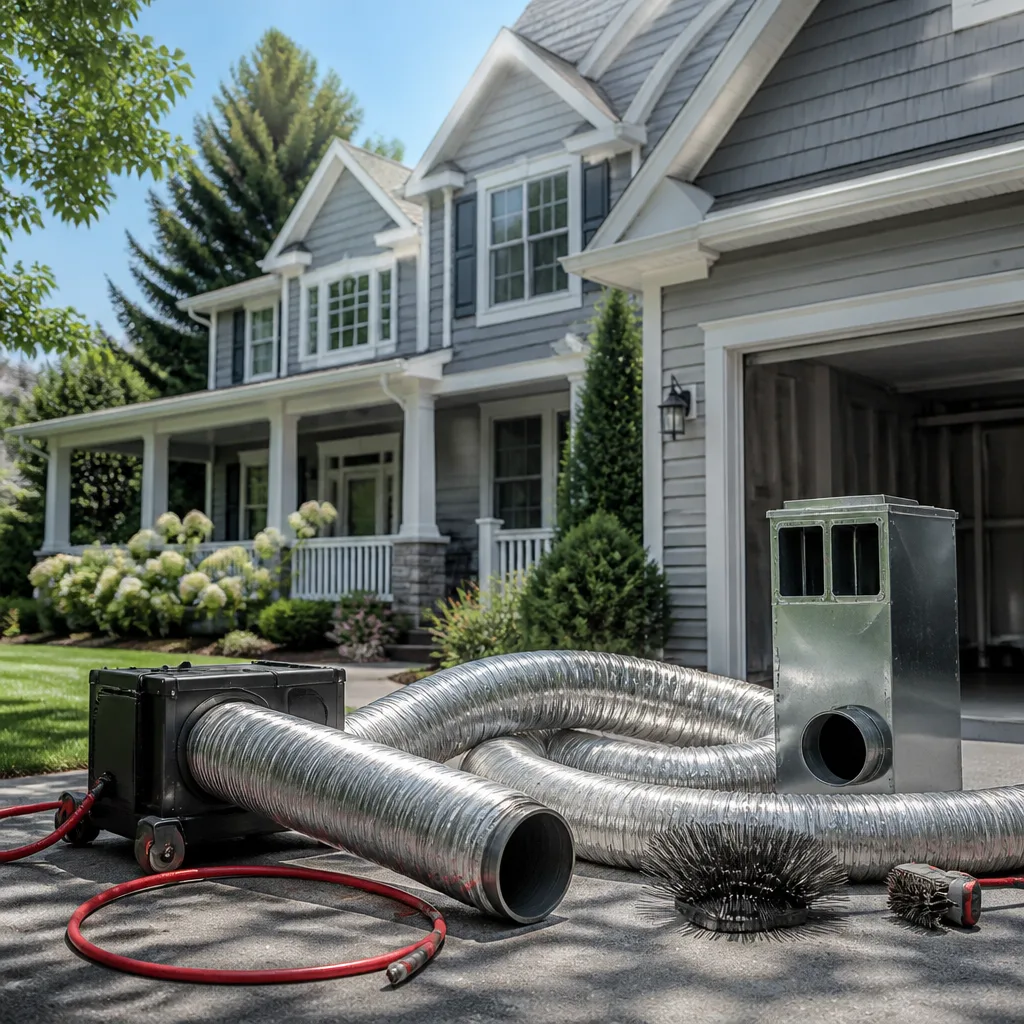 Whole-home duct cleaning
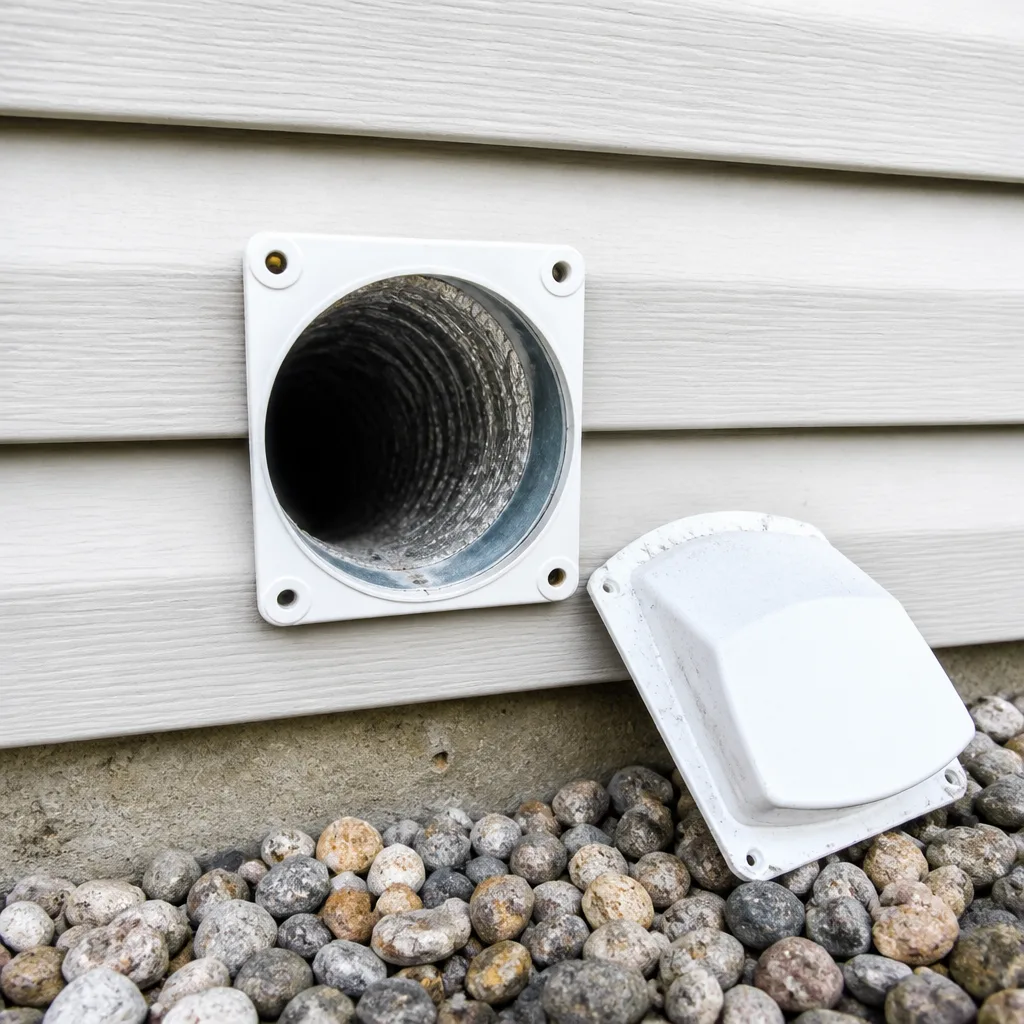 Dryer vent cleaning
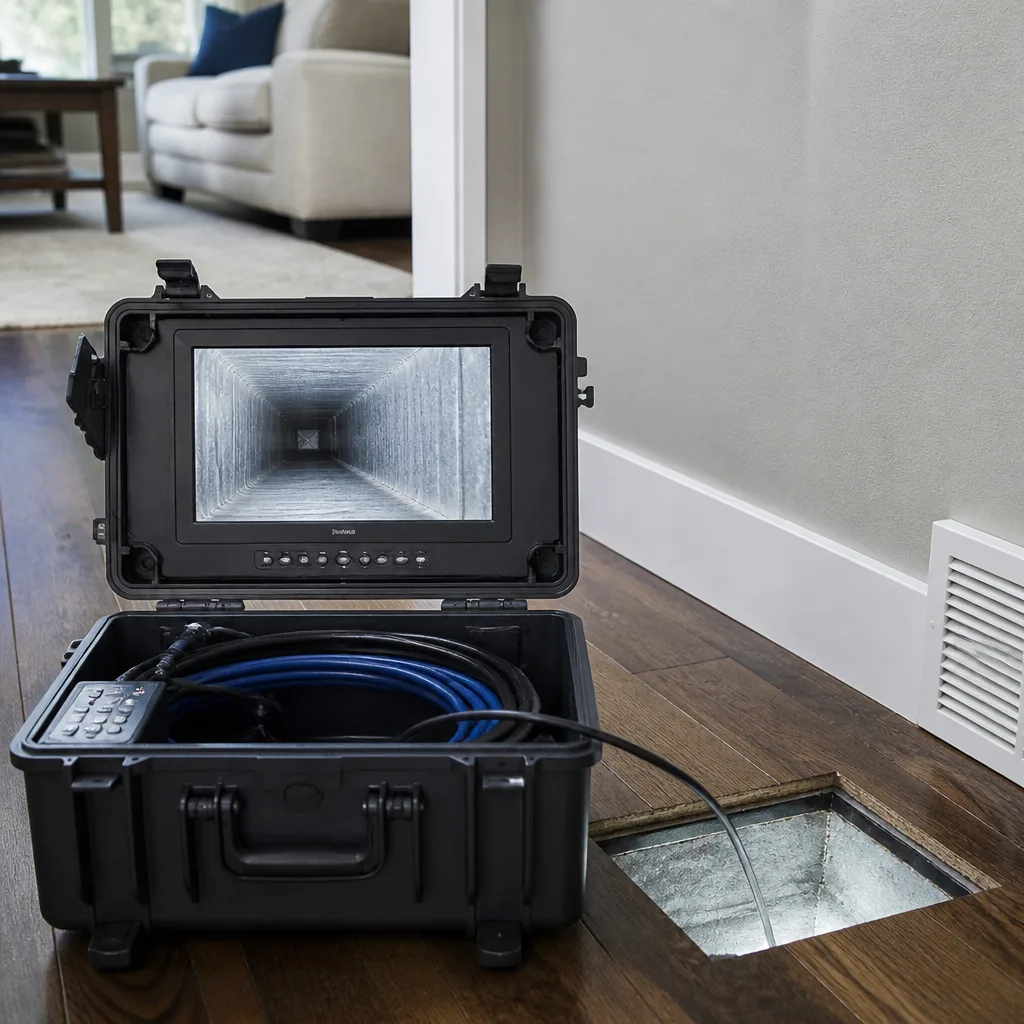 Camera inspection
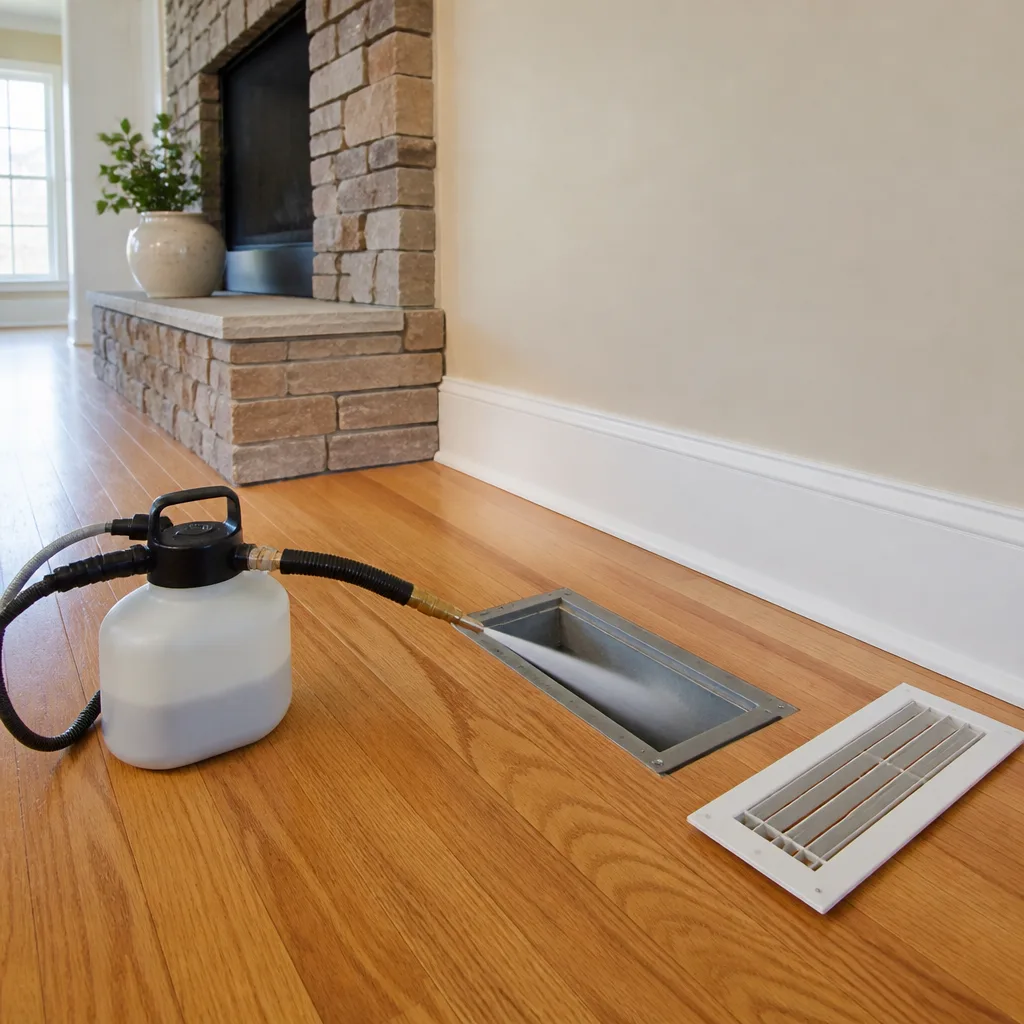 Sanitizing & deodorizing
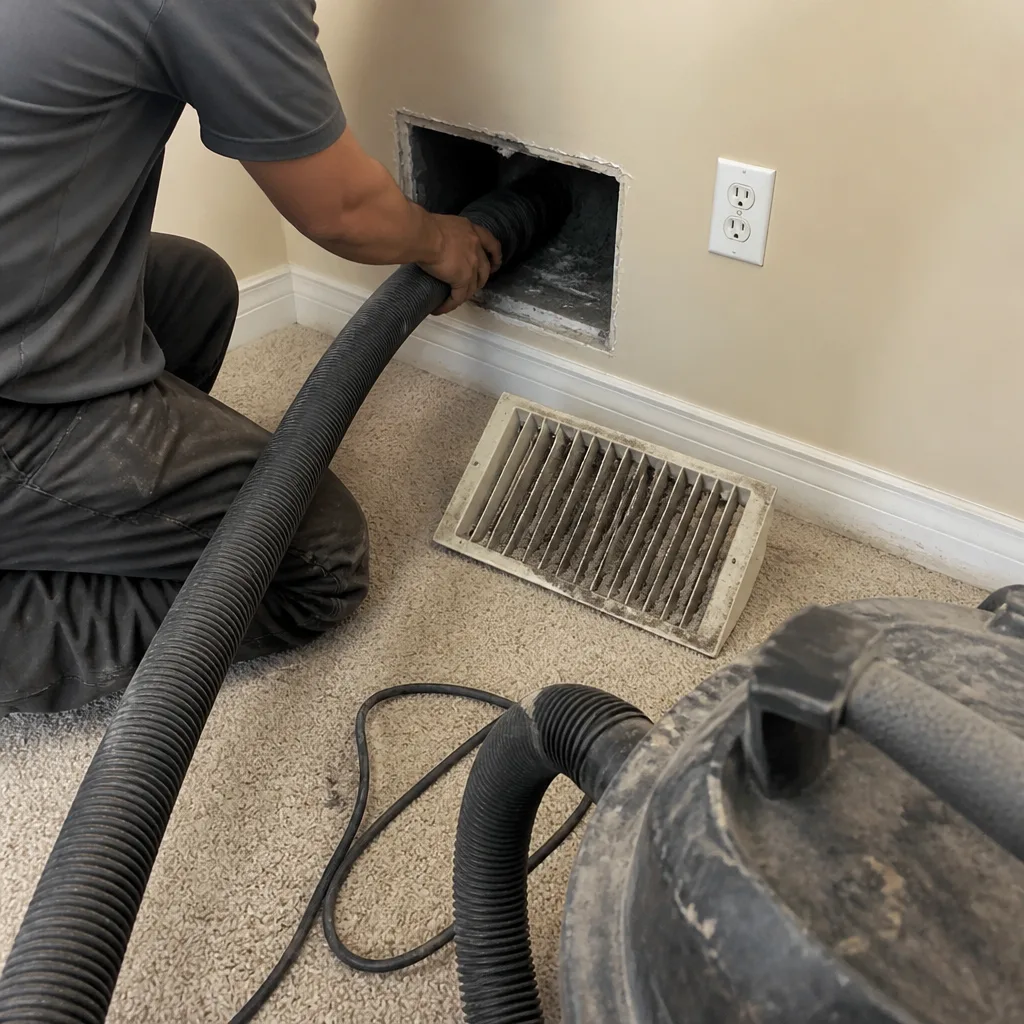
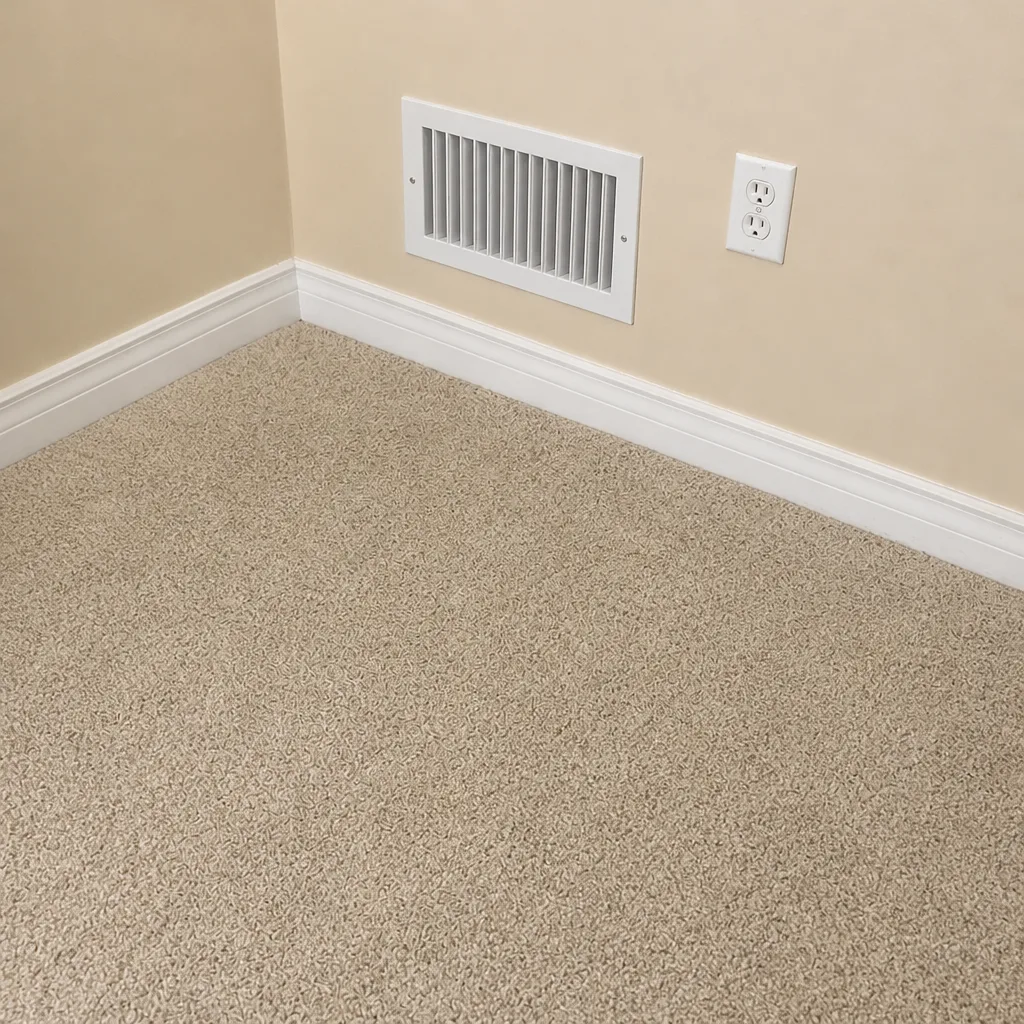
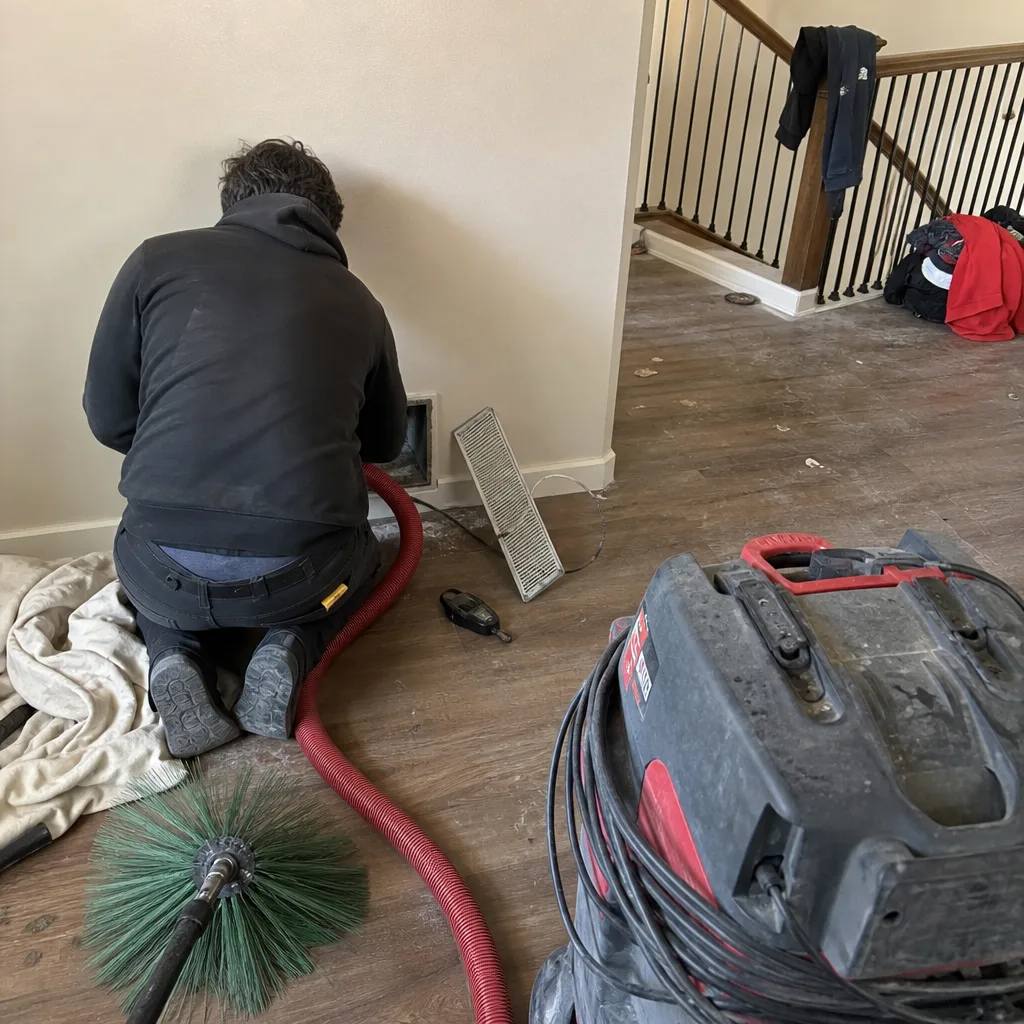
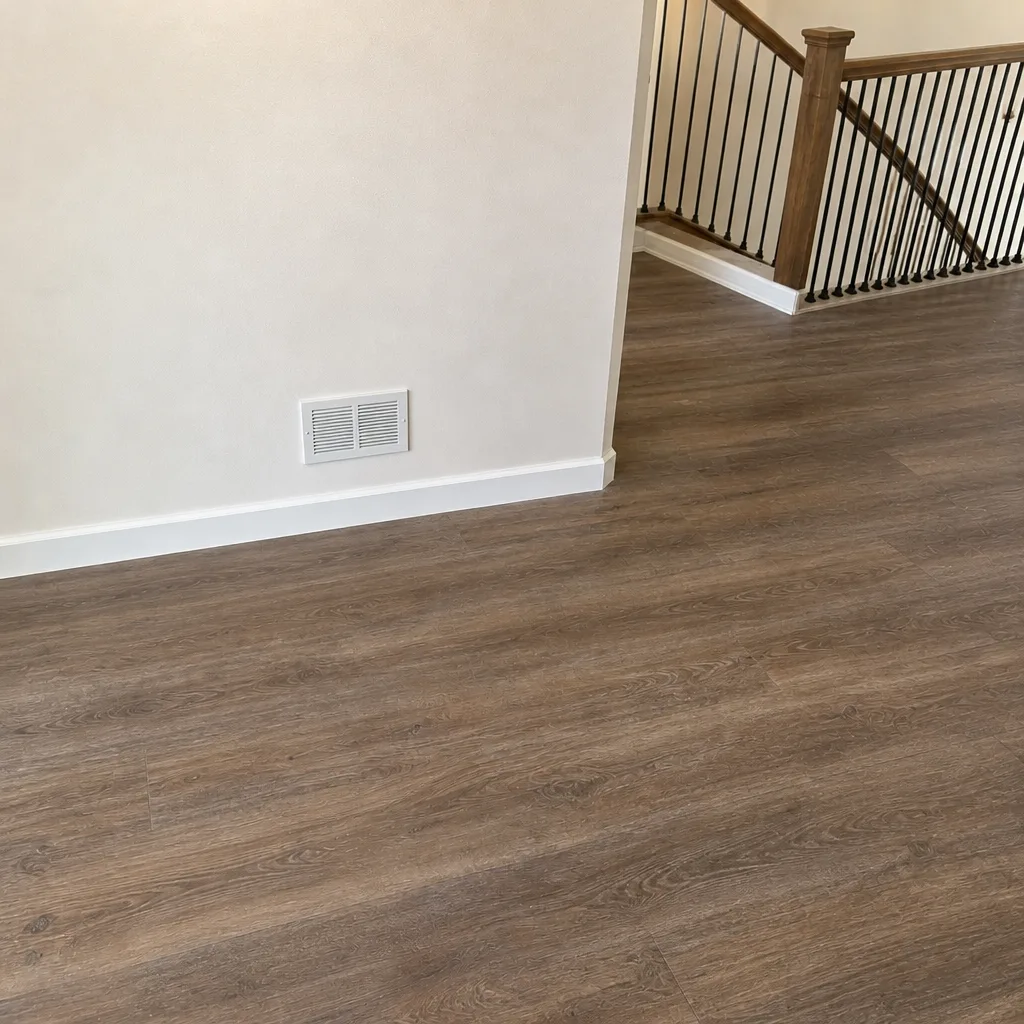
Whole-system duct and dryer vent check with before-and-after photos - you see exactly what came out of your vents
That "$99 whole-house special" is a bait ad - the real number appears once they are in your hallway, or the "clean" is a shop-vac at the register. We photograph the inside of your ducts before and after instead.
DIY vs Professional Air Duct Cleaning: The Lehi Homeowner’s Decision Guide
Here’s a number worth sitting with: a homeowner with a shop vac, a dryer vent brush, and a Saturday afternoon can meaningfully clean about 15% of the accessible surface area inside their duct system. The other 85% sits behind geometry, pressure, and sheet metal that a consumer tool physically cannot reach. That gap isn’t a sales pitch. It’s plumbing and physics. In Lehi, where wind-blown dust off the valley floor and long dry summers push a lot of particulate through household returns, that 85% is the part that actually determines what your family breathes. This guide draws the equipment-capability line clearly, so you decide based on what the tools can and can’t do rather than on a coupon in the mailbox.
Quick Answer
DIY air duct cleaning can handle register grilles, visible boot interiors, and the first couple feet of accessible branch runs, but it cannot reach the main trunk, the air handler interior, or the blower wheel without professional negative-pressure equipment and rotating brush systems. If your ducts show visible mold, pest activity, or heavy buildup, or if anyone in the home has respiratory sensitivities, hire a professional. For light maintenance between professional cleanings, DIY is a reasonable supplement, not a replacement.
Styles & brands we work with
- Whole-home duct cleaning
- Dryer vent cleaning
- Camera inspection
- Sanitizing & deodorizing
Table of Contents
- What a Shop Vac and Consumer Brush Kit Can Actually Accomplish
- Why Negative Pressure Is the Technical Dividing Line
- The Three Components You Should Never DIY
- What Serious DIYers Need, and Where the ROI Breaks Down
- DIY vs Professional: An Honest Cost Comparison
- Lehi-Specific Factors That Change the Equation
- When DIY Is Right vs When It Delays a Necessary Service
- The Dryer Vent Exception: Why It Deserves Its Own Decision
What a Shop Vac and Consumer Brush Kit Can Actually Accomplish
A shop vac with a good HEPA filter and a flexible brush kit can do real work. We’re not going to pretend otherwise. What it can reach is specific and limited, and understanding those limits is the whole point of this guide.
Here’s what a motivated homeowner can legitimately clean:
- Register grilles and return covers. Pop them off, wash them in a tub, let them dry. Grilles collect a surprising amount of dust and pet hair, and cleaning them improves airflow and appearance immediately.
- Visible boot interiors. The boot is the sheet-metal elbow just behind the register that turns the duct toward the room. You can often reach the first several inches of it with a brush and vac.
- The first 24 inches of accessible branch runs. If a branch duct is straight and you can see into it from the register opening, a flexible brush can reach the near section. Beyond the first bend, you’re working blind.
- Return air grilles and the filter slot. Regular filter changes and grille cleaning are the highest-value DIY tasks in the whole system. They prevent a lot of the buildup a professional cleaning has to remove.
What that adds up to is roughly the register-end of the system. Everything downstream of the first bend, everything in the main trunk line, and everything inside the air handler cabinet is out of reach for a consumer tool. In our experience working Lehi homes, the trunk line and the air handler are where the heaviest accumulation lives, because that’s where airflow slows and debris settles.
Why Negative Pressure Is the Technical Dividing Line
This is the section that matters most if you’re deciding between DIY and professional air duct cleaning. The difference isn’t brush quality or suction strength. It’s pressure direction.
When you clean a duct from the register end with a shop vac, you’re pulling air toward you through a small opening. Debris loosens, some of it gets captured, and a meaningful fraction of it gets pushed into the room or redistributed into the branch line you just cleaned. That’s not a knock on your technique. It’s what happens when you agitate a duct without controlling the pressure envelope around the whole system.
A professional setup works the opposite way. The system is put under negative pressure first, meaning the entire duct network is held at a lower pressure than the living space. Then the mechanical cleaning begins. Loose debris gets captured into the negative-pressure airstream and pulled toward a collection point rather than into your bedroom.
Here’s what that looks like in practice:
- Containment. Negative-air equipment is set up to hold the work zone at reduced pressure, so dislodged material moves toward the machine, not into the home. We use Abatement Technologies negative-air units for exactly this reason.
- Mechanical agitation. Rotating brush systems on flexible shafts travel through the duct, scrubbing the interior walls as they go. A Rotobrush or Nikro system reaches the main trunk and long branch runs that a hand brush can’t.
- Extraction under pressure. The loosened material is pulled out through the negative-pressure side, not vacuumed from the register end.
- Verification. Before-and-after photos show what came out and what the duct interior looks like after cleaning. That’s not a marketing flourish. It’s the only way a homeowner can actually confirm the work happened.
The main trunk line is the part of the system a consumer tool simply cannot reach. It’s typically the largest-diameter duct in the house, it often runs through unconditioned space, and it accumulates the most debris because airflow is slowest there. If your DIY effort stops at the register, the trunk is untouched.
This is why the DIY vs professional question isn’t really about effort or willingness. It’s about whether your tool can change the pressure environment of the whole system. A shop vac can’t. A truck-mount or high-CFM portable negative-air unit can.
The Three Components You Should Never DIY
Some parts of the system are not a judgment call. They’re a hard stop. These three components involve either electrical risk, mechanical risk, or biological contamination, and they should be handled by a trained technician.
1. Blower Wheel Removal and Cleaning
The blower wheel is the spinning fan inside the air handler that moves air through the whole system. It’s balanced from the factory and sits on a motor shaft that has specific torque and alignment requirements. Removing it to clean it means disconnecting power, disassembling the cabinet, and reinstalling it correctly. Get it slightly out of balance and you’ll hear it, feel it, and eventually damage the motor bearing. The blower is also one of the dirtiest components in the system because it’s constantly pulling air through the return. Cleaning it correctly is part of a full HVAC cleaning, and it’s not a shop-vac job.
2. Air Handler Cabinet Interior
The cabinet houses the blower, the evaporator coil, the filter rack, and usually a drain pan. It’s a tight, dark space with electrical connections, refrigerant lines, and often a condensate drain that can clog. Cleaning it requires negative pressure, careful containment, and knowing what not to touch. The evaporator coil fins are easily bent, and a bent coil reduces system efficiency. This is also where mold can establish if the drain pan has been standing wet, which is a real concern in a dry-but-swinging climate like Lehi’s, where summer cooling runs hard and the coil stays wet for months.
3. Any Duct With Visible Mold or Biological Growth
If you see dark spotting, fuzzy growth, or a musty smell near a register, stop. Mold in ductwork isn’t a cleaning problem, it’s a moisture problem that needs to be diagnosed and corrected before cleaning. Cleaning mold off a duct surface without fixing the moisture source just gives it a clean surface to regrow on. Sanitizing after the moisture issue is resolved is a separate step, and it’s one a professional should handle because the products and application methods matter. Consumer foggers sold for duct sanitizing are not the same thing as the EPA-registered products a professional uses, and applying them incorrectly can leave residue in the airstream your family breathes.
We’ll add a fourth: pest activity. If you find droppings, nesting material, or evidence of rodents or insects in a duct, that’s a contamination event, not a maintenance task. It needs proper containment and disposal.
What Serious DIYers Need, and Where the ROI Breaks Down
Let’s be fair to the DIY side. A homeowner who wants to do this properly can buy real equipment. Here’s what a serious setup looks like and what it costs, so you can see where the math stops working.
- HEPA shop vac (5+ gallon, 2.5+ peak HP): roughly $150-$350. Consumer-grade, but capable of catching what it reaches.
- Flexible duct brush kit with extension rods: roughly $40-$120. Reaches 10-15 feet in a straight run, less around bends.
- Register removal tools and a good cordless drill: $50-$150 if you don’t own them.
- Respirator (N95 or better), gloves, eye protection: $40-$80.
- Negative-air containment setup: this is the break point. A proper negative-air machine is not a consumer product. Rental units exist, but operating one safely requires knowing how to seal the system, where to place the collection point, and how to run the cleaning sequence so you don’t create a pressure imbalance that pulls debris into the wrong part of the house.
- Rotating brush system with flexible shaft: professional equipment in the $1,000-plus range. Not a realistic consumer purchase for one home.
Add up the consumer-grade gear and you’re at $300-$700 before you’ve cleaned anything. That buys you access to the first 15% of the system. The professional equipment that reaches the rest costs more than a full-system cleaning by a wide margin, and it requires training to use correctly.
Here’s the honest framing. DIY gear makes sense if you’re going to use it repeatedly over years, mostly for filter and grille maintenance and light register cleaning. It does not make sense as a one-time purchase to attempt a full-system job. The ROI breaks down at exactly the point where the job gets hard: the trunk line, the air handler, and the pressure containment.
DIY vs Professional: An Honest Cost Comparison
Here’s how the two paths compare once you account for what each one actually accomplishes.
| Factor | DIY Approach | Professional Approach |
|---|---|---|
| Upfront cost | Approx. $300-$700 for consumer equipment (one-time, reusable) | Free estimate, then a per-job written price |
| System coverage | Register grilles, boots, first 2 feet of branches | Full system: blower to vent, including main trunk |
| Pressure control | None. Debris can redistribute into living space. | Negative-air containment captures dislodged debris. |
| Air handler access | Not accessible without disassembly | Blower wheel and cabinet interior cleaned |
| Mold and contamination | Cannot safely address | Diagnosed, corrected, and sanitized |
| Verification | What you can see from the register | Before-and-after photos of your own system |
| Recurrence | Buildup continues in unreached sections | Full-system clean resets the clock |
One thing we want to be clear about: we don’t quote per-vent prices, and we’d be suspicious of anyone who does. A per-vent price is a teaser that turns into a bigger invoice once the technician is on site. The rate for a job is set per system, agreed before work starts, in writing. That’s the number that matters.
For Lehi homeowners, the honest math usually goes like this. If you’ve never had the ducts cleaned and the home is more than a few years old, the professional cleaning is the better spend because the first cleaning removes the accumulated load that a shop vac can’t touch. Once the system is clean, DIY grille and filter maintenance between professional cleanings is a genuinely smart way to extend the interval.
Lehi-Specific Factors That Change the Equation
Lehi sits in a valley with a particular set of conditions that affect how fast ductwork accumulates debris. Understanding them helps you decide how aggressively to maintain your system.
Dust load. The Lehi area sees significant wind-blown dust, especially in spring, and that dust finds its way into return-air intakes and through filter gaps. If your home has a filter that’s a loose fit in the rack (common), a meaningful amount of unfiltered air is bypassing the filter and depositing in the duct and on the blower. That’s a reason the blower wheel gets dirty faster here than in a wetter, calmer climate.
Dry summers and cooling load. Long cooling seasons mean the evaporator coil stays wet for months, and the drain pan is a moisture source. That’s the setup for biological growth in the air handler if maintenance slips. It’s also why HVAC cleaning and duct cleaning belong in the same conversation rather than being treated as separate services.
Construction dust. Lehi has seen a lot of new construction and remodeling. Drywall dust, sawdust, and construction debris are fine particulates that settle deep in ductwork and are extremely difficult to remove without professional extraction. If your home is new or has had recent remodeling, a professional cleaning is worth prioritizing.
Pets and family. Pet dander and hair are heavier than dust and settle in the return side and the boot interiors. A family with multiple pets generates more load, which shortens the interval between cleanings.
The takeaway for Lehi is that the local conditions favor a professional baseline cleaning plus light DIY maintenance, rather than a DIY-only strategy. When you’re ready to book that baseline, our air duct cleaning service covers the full system from blower to vent.
When DIY Is Right vs When It Delays a Necessary Service
The question isn’t “can I do this myself?” It’s “is DIY the right call for my system right now?” Here are the scenarios where each answer wins.
DIY is the right call when:
- The system was professionally cleaned recently and you’re doing maintenance between cleanings.
- You’re only cleaning register grilles, return covers, and the filter slot. These are genuinely homeowner tasks.
- You want to reduce surface dust and pet hair before a professional visit, so the technician can focus on the parts only they can reach.
- You’re monitoring for problems (a musty smell, a rattle, a register that blows weak) rather than trying to solve them.
DIY delays a necessary service when:
- You’ve never had the system cleaned and the home is older than a few years. The accumulated load in the trunk and air handler won’t clear with a shop vac.
- Someone in the home has allergies, asthma, or respiratory sensitivity. The unreached 85% is the part that matters most for them.
- You see visible mold, smell mustiness, or have had moisture issues. This is a diagnosis problem, not a cleaning problem.
- You’ve had recent construction or remodeling. Fine dust needs professional extraction.
- The blower wheel is visibly caked or the airflow is weak. That’s an HVAC cleaning concern, and it’s worth having it assessed.
If you’re in the second group, the delay has a cost. Every month the system runs with a loaded trunk line and a dirty blower, that material keeps circulating through the air your family breathes. A free estimate is the fastest way to know whether you’re looking at a maintenance task or a full-system service. Call (833) 513-8123. We answer 24/7. Fast dispatch from 7am to 7pm, Sunday through Friday.
The Dryer Vent Exception: Why It Deserves Its Own Decision
Dryer vent cleaning sits in a different category from duct cleaning, and it deserves its own decision. Lint accumulation in a dryer vent is a recognized fire hazard, and the vent is a confined pathway that a homeowner often can’t fully inspect. A vacuum from the outside can pull some lint, but it can’t scrub the vent walls, and it can’t address the transition duct behind the dryer where the worst accumulation usually sits.
This is one of the few areas where we’d steer a homeowner toward professional service more readily than duct cleaning. The risk profile is different. A clogged lint vent doesn’t just reduce efficiency, it creates a fire condition. Our dryer vent cleaning service is a standalone offering for exactly this reason. If you want to check your own vent between cleanings, pull the dryer out, disconnect the transition duct, and look inside with a flashlight. If you can’t see through it, it needs professional attention.
See the difference
 Before
 After
 Before
 After
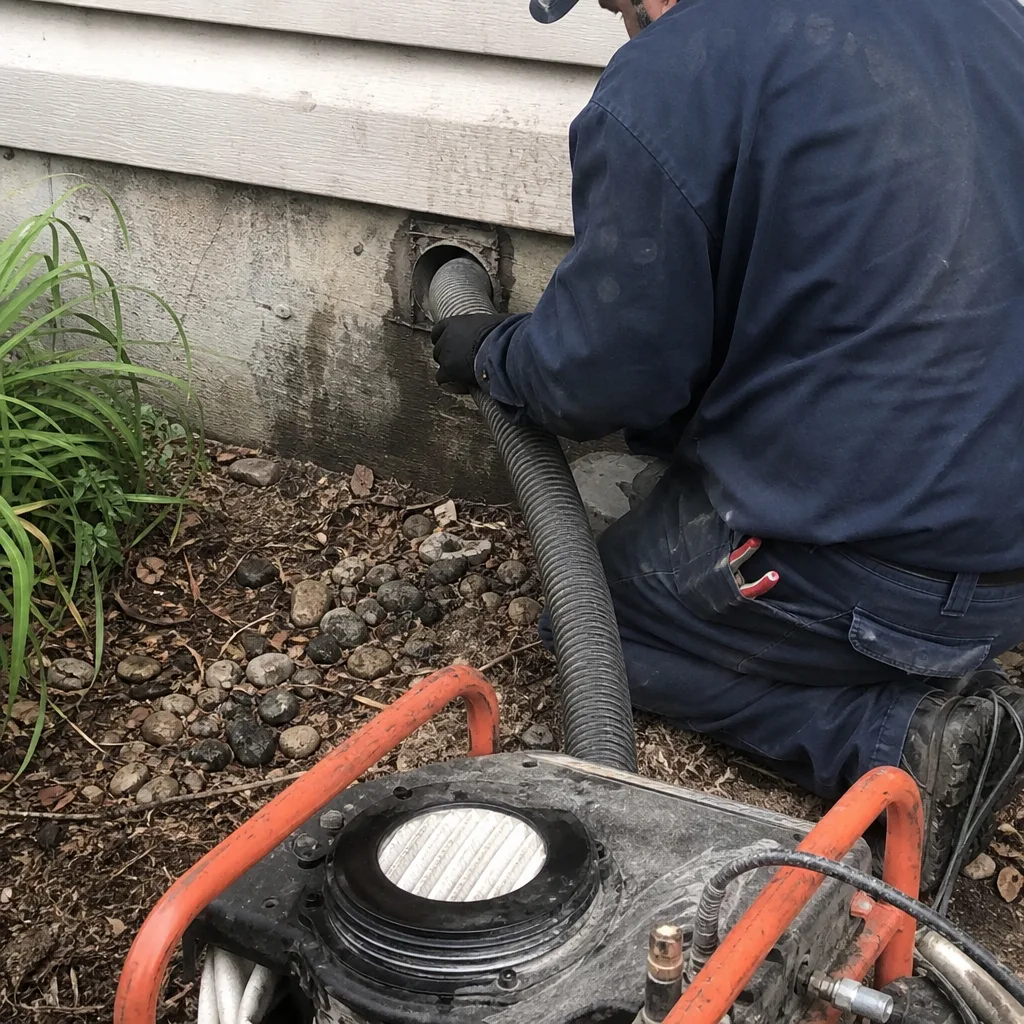 Before
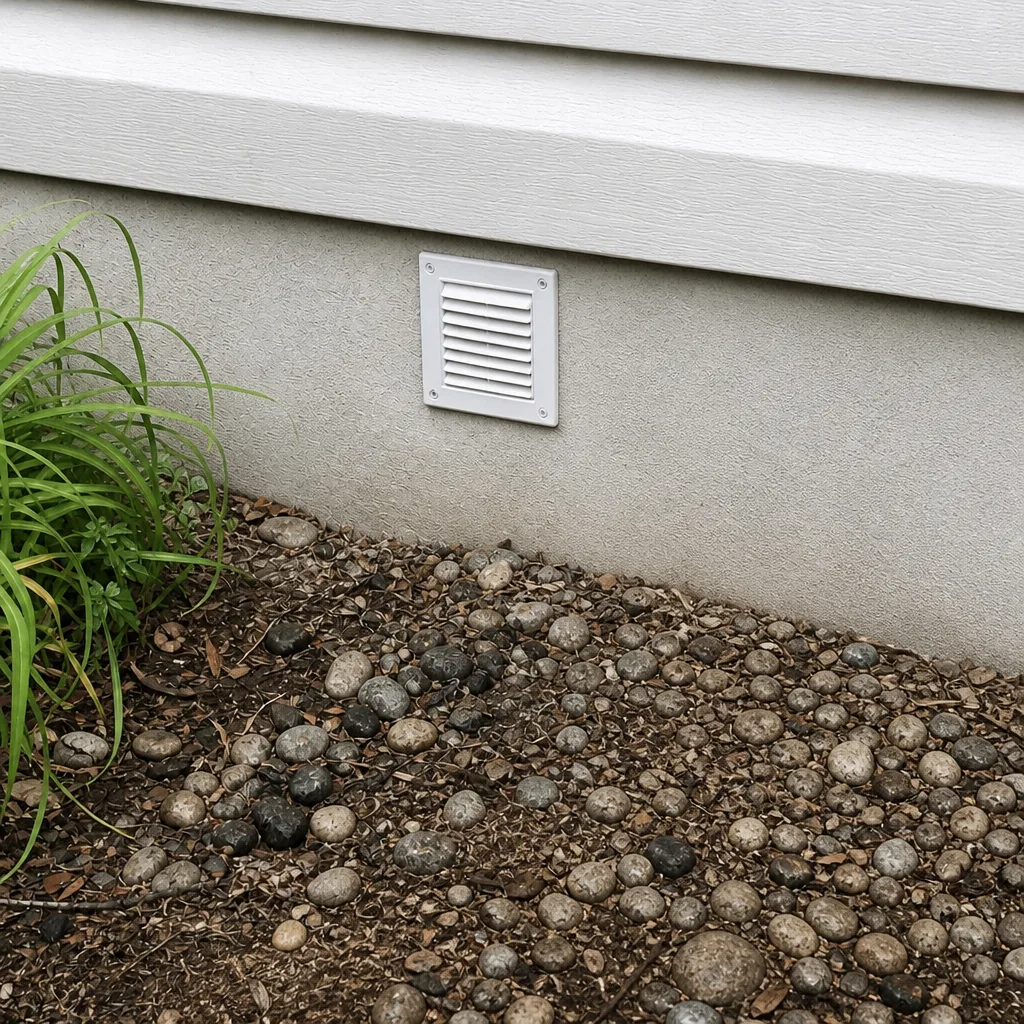 After
Common Mistakes to Avoid
- Cleaning only from the register end. It feels productive because you see dust come out, but it leaves the trunk and air handler untouched and can push debris deeper into the branch. Two sentences isn’t enough to describe how often we see this, so we’ll just say it’s the most common DIY outcome.
- Using a shop vac without a HEPA filter. A standard filter blows fine particulate back into the room. If you’re going to DIY the accessible parts, use a HEPA-rated filter and open a window.
- Ignoring the filter rack fit. A loose filter lets unfiltered air bypass into the duct and blower. Check that your filter seats snugly and that the rack isn’t bent.
- Spraying consumer “duct sanitizer” foggers. These products are not the same as professional-grade sanitizing, and misapplication can leave residue in the airstream. Leave sanitizing to a technician after moisture issues are corrected.
- Cleaning around visible mold instead of diagnosing it. Cleaning a moldy duct surface without fixing the moisture source just gives the mold a fresh surface.
- Assuming a new-construction home doesn’t need cleaning. Construction debris and drywall dust settle into new ductwork during the build. A first cleaning on a new Lehi home is worth doing.
- Treating a dirty blower as a duct problem. A caked blower wheel reduces airflow and efficiency, and it’s an HVAC cleaning task, not a duct task. Cleaning the ducts without addressing the blower is a half job.
When to Call a Professional
Call a professional when the job crosses the equipment-capability line. That means: you’ve never had the system cleaned and the home is more than a few years old; you can see mold, smell mustiness, or find pest evidence; someone in the home has respiratory sensitivity; you’ve had recent construction; the blower wheel is visibly dirty or airflow is weak; or the dryer vent is clogged. Those are the cases where negative pressure, rotating brush systems, and air handler access make the difference. For duct integrity, we can find and fix leaks and gaps on the spot rather than cleaning around them, and for long-term air quality we work with Honeywell and Aprilaire systems so the fix goes beyond cleaning. Lehi Air Duct Cleaning offers free estimates in Lehi. Call (833) 513-8123. We answer 24/7. Fast dispatch from 7am to 7pm, Sunday through Friday.
Frequently Asked Questions
Professional air duct cleaning in Lehi is priced per system, not per vent, and the exact price is set by a free written estimate after the system is assessed. We don’t quote teaser per-vent prices because they don’t reflect what a full-system job involves. The estimate sets the final price, and it’s agreed before any work starts. Call (833) 513-8123 for an exact quote – estimates are free.
You can clean the register grilles, boot interiors, and the first couple feet of accessible branch runs with a shop vac and brush kit, but you cannot reach the main trunk line, the blower wheel, or the air handler interior. That’s roughly 15% of the accessible surface area. The remaining 85% requires negative-pressure equipment and rotating brush systems. For light maintenance between professional cleanings, DIY is a reasonable supplement.
Yes, for maintenance tasks. Cleaning grilles, changing filters, and wiping down return covers are genuinely homeowner jobs that extend the interval between professional cleanings. DIY is the wrong answer when it’s used as a substitute for a full-system cleaning that the system actually needs. The distinction is between maintenance and a repair-level job.
Cheap quotes are often per-vent teaser prices that turn into a much larger invoice once the technician is on site and “finds” extra work. A legitimate quote is priced per system and set in writing before work starts. Ask what equipment the company uses and whether negative pressure is part of the job. If the answer is vague, the price is too. Call (833) 513-8123 for an exact quote – estimates are free.
Ask for before-and-after photos of your own system. A professional cleaning should produce visible evidence of what came out and what the duct interior looks like afterward. That’s the only way to confirm the work happened rather than being told it did. We provide before-and-after photos on every job.
Most Lehi homes benefit from a full-system cleaning every few years, with more frequent intervals if you have pets, allergies, recent construction, or a lot of occupants. The honest answer is that it depends on the load, not a fixed calendar. A free assessment is the fastest way to know where your system stands. Call (833) 513-8123 for an exact quote – estimates are free.
It can reduce the particulate load circulating through the system, which helps allergy sufferers breathe easier, but it’s not a medical fix. The biggest gains come from a full-system clean combined with a well-fitting filter and, if needed, an air quality system like a Honeywell or Aprilaire unit. Cleaning without addressing filtration leaves part of the problem in place.
Duct cleaning addresses the ductwork: grilles, boots, branch runs, and the main trunk. HVAC cleaning addresses the air handler itself: the blower wheel, cabinet interior, coil area, and drain pan. They’re related but distinct, and a full air-pathway service covers both. That’s why we offer hvac cleaning as its own service alongside duct cleaning.
Should I clean my ducts if I’m remodeling?
Yes, or at least have them assessed. Drywall dust, sawdust, and construction debris are fine particulates that settle deep in ductwork and are very difficult to remove without professional extraction. If you’ve had recent remodeling or you’re in a newer Lehi home, a professional cleaning is worth prioritizing.
The main items are negative-air containment units (we use Abatement Technologies), rotating brush systems with flexible shafts (Rotobrush and Nikro), and high-CFM extraction. These are commercial and restoration-grade tools, and the negative-air setup is what prevents dislodged debris from entering the living space. We’ve seen what a difference pressure control makes on a Lehi home with a loaded trunk line, and it’s the technical dividing line between a real clean and a partial one.
The Bottom Line
The DIY vs professional question for air duct cleaning comes down to equipment capability, not effort. A shop vac and brush kit can genuinely handle grilles, boots, and the first couple feet of branches, which is good maintenance. But the main trunk, the blower wheel, the air handler interior, and any duct with visible mold or biological growth are past the line a consumer tool can cross. In Lehi, the local dust load, long cooling season, and construction activity all argue for a professional baseline cleaning plus light DIY upkeep. Start with a free estimate, and you’ll know exactly which category your home is in. Learn more about Lehi Air Duct Cleaning and the full-system approach.
Written by the team at Lehi Air Duct Cleaning.